


 202 / 536

After eight years, the HERCA association has become a
key radiation protection player in Europe, and can already
claimtangible progress in the harmonisation of regulations
and practices. HERCA thus worked on optimisation and
justification of medical imaging procedures for patients,
as well as the management of transboundary emergency
situations in the event of a nuclear accident.
1.2 Cooperation in the fields
of nuclear safety and radiation
protection worldwide
ASN multiplies its initiatives to share nuclear safety
and radiation protection best practices and regulations
outside Europe.
Within IAEA, ASN thus actively participates in the work
of the Commission on Safety Standards (CSS) which
drafts international standards for the safety of nuclear
installations, waste management, the transport of
radioactive substances and radiation protection. Although
not legally binding, these standards do constitute an
international reference, including in Europe. They are also
the documentary reference standards for the international
audits overseen by the Agency. They in particular include
the Safety Regulator Audit Missions (IRRS, Integrated
Regulatory Review Service) the development of which is
being supported by ASN, alongwithOSART (Operational
Safety Review Team) audits of nuclear power plants in
operation.
ASN also contributes to safety harmonisation work
by actively participating in the Multinational Design
Evaluation Programme (MDEP) the aim of which is
joint evaluation by safety regulators of the design of
new reactors, including the EPR. This programme
was initiated in 2006 by ASN and the United States
Nuclear Regulatory Commission (US-NRC) and
currently comprises 14 regulatory bodies. Its aim
is harmonisation of the safety objectives, codes and
standards associated with the safety evaluation of new
reactors.
In the field of radiation protection, ASN is a stakeholder
in various international review forums such as UNSCEAR
(United Nations Scientific Committee on the Effects of
Atomic Radiation) or ICRP (International Commission
on Radiological Protection). ASN considers that through
their publications, these entities contribute to improved
understanding of exposure to ionising radiation and of
health effects. They issue recommendations helping to
improve the protection of exposed persons, whether
patients in the medical sector or specific categories
of workers.
2. RELATIONS WITH THE EUROPEAN
UNION
2.1 European Union
ASN has always considered that a move towards
European harmonisation of nuclear safety principles
and standards was necessary, provided that this is the
result of fundamental work by the regulatory bodies
and between regulatory bodies and licensees. European
harmonisation and the adoption of community directives
depend on upstream technical exchanges between the
main stakeholders.
2.2 The EURATOM Treaty
The Treaty creating the European Atomic Energy
Community (EURATOM) was signed in 1957 and
has led to the harmonised development of a strict
oversight system for nuclear safety (see Chapter 7 of
the Treaty) and radiation protection (see Chapter 3
of the Treaty). In an Order of 10th December 2002
(Case C-29/99 Commission of European Communities
versus
EU Council), the EU Court of Justice, ruling
that no artificial boundary could be created between
radiation protection and nuclear safety, recognised the
principle of the existence of Community competence
in the field of safety, as in the field of management of
radioactive waste and spent fuel.
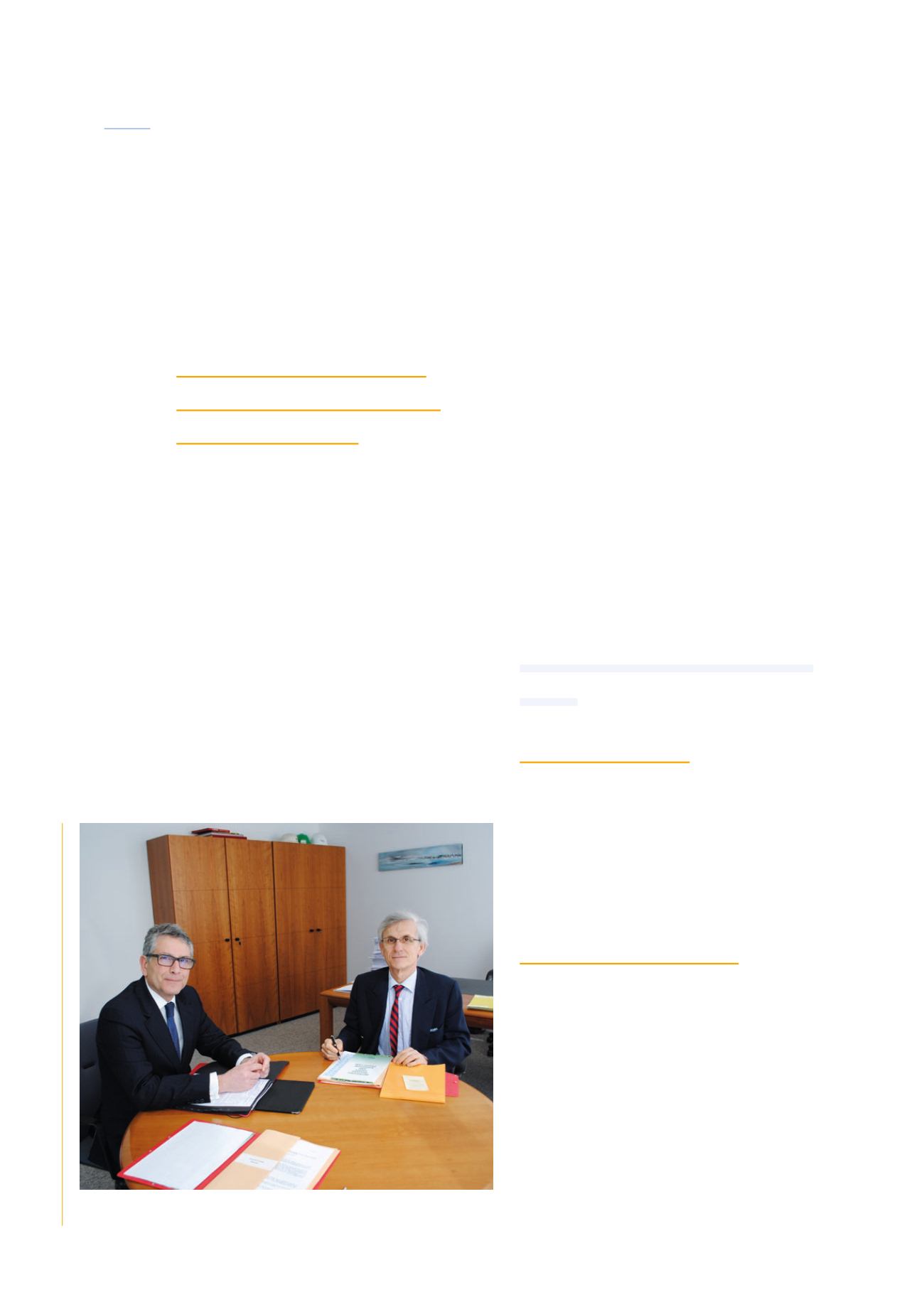
Meeting between Philippe Jamet, ASN Commissioner, and Gerassimos Thomas, Deputy Director
General DG ENER, European Commission, ASN, 27th March 2015.
202
CHAPTER 07:
INTERNATIONAL RELATIONS
ASN report on the state of nuclear safety and radiation protection in France in 2015