


 290 / 536

STRASBOURG DIVISION
a distinct improvement in the detection of malfunctions
(15 significant events report to ASN in 2015 compared
with 9 in 2014) and in experience feedback analysis,
including in the centres were the initiative was less
developed.
For the coming years, ASN considers that deployment of
the continuous improvement initiative must be pursued,
notably by the implementation of internal practices
evaluation audits, and that the goodness of fit between
the documentation system and actual practices must
be ensured.
Interventional practices
For several years now, interventional practices (see
chapter 9, point 1.1.2) have represented a regulation
area with significant implications for ASN, which carried
out six inspections in departments exercising these
activities in Alsace and Lorraine in 2015. In order to
cover the entire territory, ASN’s Strasbourg division also
conducted a survey with all the centres in 2015. The
returns from the departments have enabled a precise
map of the centres practising these activities to be
drawn up and their radiation protection practices to
be evaluated.
ASN considers that radiation protection of patients and
medical staff is better applied in fixed and dedicated
facilities than in operating theatres in which mobile
devices are used. ASN has also taken positive note that
the centres performing the procedures with the highest
radiological risk are developing good practices which
limit the doses delivered to the patients and workers.
On the whole, the Persons Competent in Radiation
protection (PCR) and the medical physicists appeared
to be extremely involved in their missions. Nevertheless,
vigilance must be maintained regarding the means
allocated to medical physicists so that they can fully
ensure their radiation protection duty.
On the other hand, ASN underlines the persistent
difficulties the centres have in improving occupational
radiation protection in operating theatres, particularly
with regard to the training of exposed personnel and the
systematic wearing of appropriate dosimetry equipment
by the medical staff.
Nuclear medicine
ASN inspected four nuclear medicine departments
in Alsace and Lorraine in 2015, in one case because
the department was implementing a new radium
treatment. These inspections revealed a situation that
is generally satisfactory. ASN underlines in particular
the high level of involvement of the personnel in
charge of radiation protection and the overall quality
of integration of radiation protection of both patients
– by appropriate use of hybrid gamma cameras for
example – and workers, who are well informed in
the area of radiation protection.
The identified points requiring vigilance mainly
concern the implementation of zoning and radiation
protection technical controls that are appropriate for the
contamination risks prevailing in these departments.
Computed Tomography
ASN carried out three inspections of computed
tomography departments in 2015 and observes that
the delivered doses are controlled. The teams now
have an awareness of patient radiation protection. On
the other hand, the doses delivered could be further
optimised and rendered more uniform between the
professionals by putting in place protocols defined in
collaboration with the medical physicists on a more
systematic basis.
ASNhas again noted several events involving unnecessary
exposure of persons due to errors in the identification
of the patients having to undergo the examinations.
Dental radiology
In 2015, the Strasbourg division conducted a remote
verification campaign on the documentation of dental
surgeries using radiology devices. ASN observed
disparities in the application of regulatory requirements,
depending in particular on the quality of service of the
external PCRs used by many dentists.
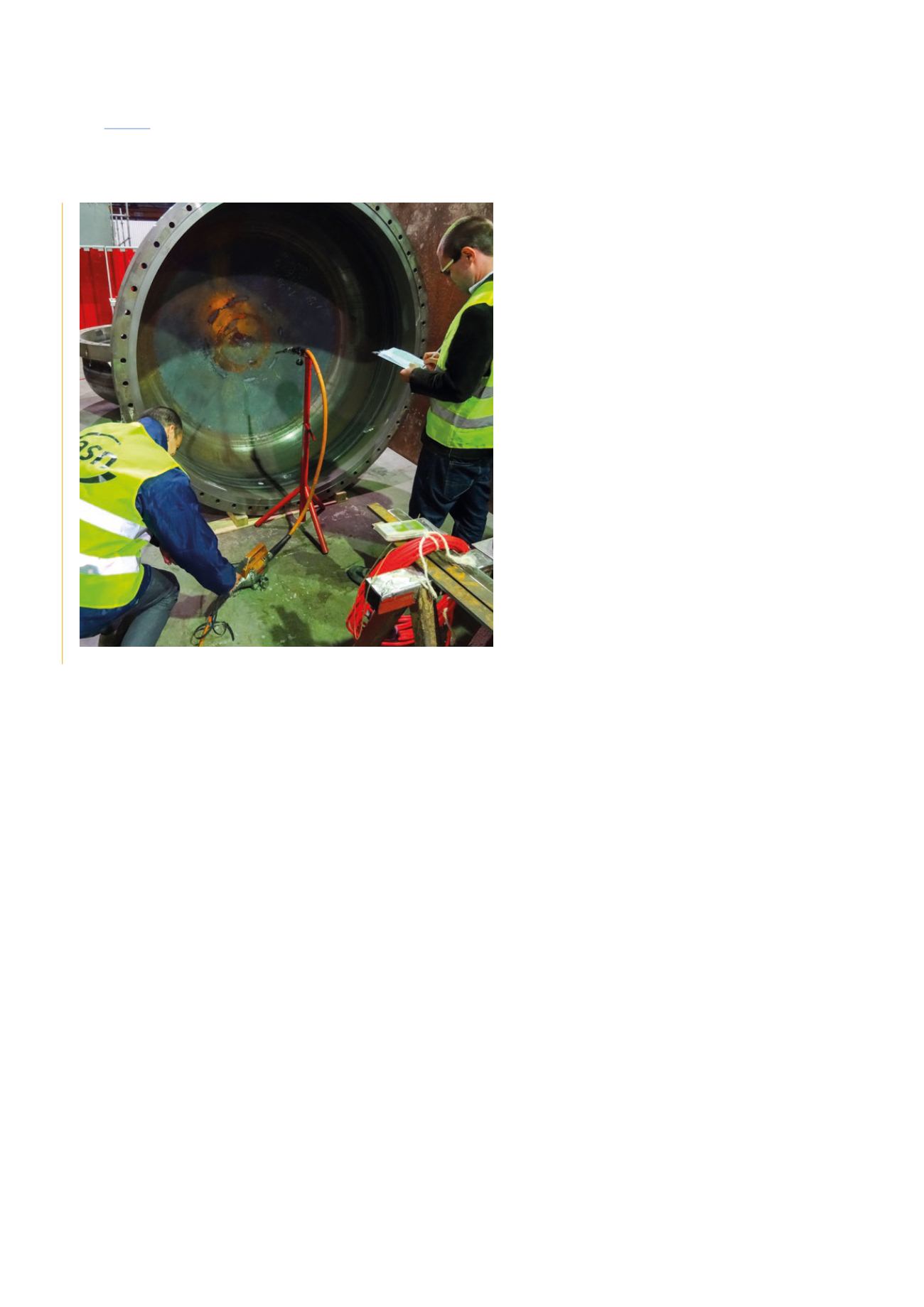
ASN inspection on an industrial radiography worksite, July 2015.
290
CHAPTER 08 :
REGIONAL OVERVIEW OF NUCLEAR SAFETY AND RADIATION PROTECTION
ASN report on the state of nuclear safety and radiation protection in France in 2015