


 39 / 536

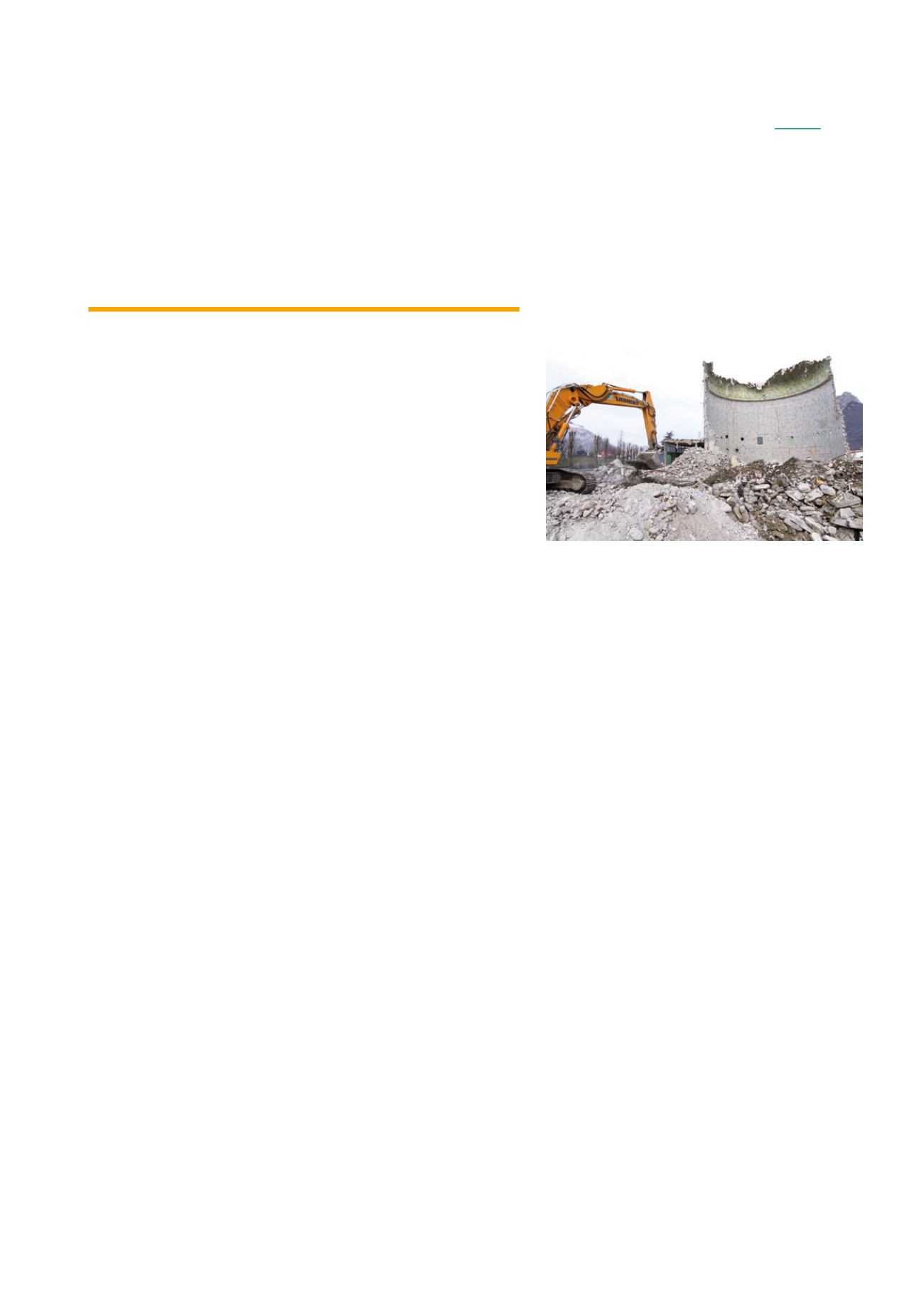
The term decommissioning covers
all the activities performed after
shutdown of a nuclear facility, in
order to attain a final condition
in which all the dangerous and
radioactive substances have been
removed. In 2015, about thirty
nuclear facilities of all types
were shut down or undergoing
decommissioning in France.
Doctrine and regulations
In 2015, the principle of immediate
dismantling (anticipated as of the
design stage, initiated at shutdown of
the installation, with the dismantling
operations potentially taking a
very long time) was enshrined
in the TECV Act. This Act also
renovates the decommissioning
procedure by making a clearer
distinction than before between
final shutdown of the facility and
its decommissioning. ASN is pleased
to see the progress made on these
points. For preparation of the texts
required by the Act, ASN issued an
opinion on 28th January 2016 on the
draft decree updating the procedures
surrounding final shutdown and
decommissioning of BNIs.
In 2015, ASN also continued to
update Guide No. 14 concerning
clean-out of structures and Guide
No. 6 on final shutdown and
decommissioning of BNIs. Finally,
ASN produced a draft guide on
the management of contaminated
soils in nuclear installations.
These three guides will be opened
for consultation with a view to
publication in 2016.
Facilities
2015wasmarkedby two installation
delicensing operations: the Siloé
reactor inGrenoble, mainly used for
technological irradiationof structural
materials and nuclear fuels, in the
resolution of 9th January 2015,
and the Electromagnetic Radiation
Laboratory (LURE) in Orsay, a
powerful X-ray production research
facility operated by the National
Centre for Scientific Research, in
the resolutionof 27thOctober 2015.
Concerning the installations operated
by EDF, ASN issued an authorisation
inDecember 2015 for the beginning
of operations to reprocess the residual
sodium in the main vessel of the
Superphenix reactor. Dismantling
of the Chinon A3 heat exchangers
continued. The preparatorywork for
dismantling of the Chooz A reactor
vessel continued. Examinationof the
safetyof the installations, examination
of the dismantling strategy and the
management of EDF waste and
Andra’s report on the technical
feasibility of Low Level, Long-Lived
waste (LLW-LL) disposal began
in 2015. Finally, after observing
shortcomings in the preparation for
thework and the risk assessments by
the BrennilisNPP, ASNaskedEDF to
revisealltheorganisationalandhuman
provisions concerned formanagement
of the risks linked to hot spot work
on the decommissioning worksites.
With regard to CEA’s installations,
ASNandASNDobserved significant
delays in the performance of the
decommissioning operations and the
recoveryandpackagingoflegacywaste,
with significant increases in the times
envisaged for these operations and
considerabledelaysinthetransmission
of the decommissioning files. ASN
and ASND asked CEA to present a
newdecommissioning strategy for all
the BNIs and individual installations
located within defence BNIs.
In connectionwith its examinationof
the decommissioning authorisation
application for thePhenixreactor,ASN
issuedaresolutionon8thJanuary2015
setting the requirements applicable
to the reactor’s “hardened safety core”
and the management of emergency
situations. In 2015, the preparation
work for the decommissioning of the
Phenix plant continued. ASNsent its
conclusions following the technical
examination and the consultations
with the Minister responsible for
nuclear safety and issued its opinion
on 22nd December 2015.
The legacy waste Recovery and
Packaging Project (RCD) currently
under way in the HAO silo and the
organised disposal of hulls, which
represent the first hold point in
decommissioning of the spent fuel
reprocessing plant operated by
Areva NC at La Hague, continued.
ASN authorised Areva NC to build
the recovery and packaging unit
in a resolution dated 10th June
2014. The civil engineering work
for the construction of the recovery
and packaging unit authorised by
the resolution of 10th June 2014
continued in 2015.
Outlook
ASN’s main actions in 2016 will
concern the continueddevelopment
of the regulatory framework for
decommissioning and the close
monitoring of certain installations:
•
assist the Ministry for the
Environment with completion of
the modifications to the Decree
of 2nd November 2007 following
the TECVAct ondecommissioning
reform;
15
Safe decommissioning
of basic nuclear installations
39
ASN Report on the state of nuclear safety and radiation protection in France in 2015
SIGNIFICANT EVENTS IN 2015