


 133 / 536

(training andmaintaining skill levels), fire andmonitoring
of stakeholders in the fuel cycle facilities;
•
industrial radiography, fields requiring high-level sealed
sources and suppliers of sources for the industrial small-
scale nuclear sector;
•
computed tomography and teleradiology for themedical
small-scale nuclear sector;
•
on-site transport within BNIs, training of transport
operators, SOHF, maintenance of packaging and
preparedness for emergency situations involving the
transport of radioactive substances.
In order to identify these activities and topics, ASN relies
on current scientific and technical knowledge and uses
the information collected by both itself and IRSN: results
of inspections, frequency and nature of incidents, major
modifications made to facilities, review of files, feedback
of data concerningdoses receivedbyworkers, information
resulting from checks by approved organisations. It can
revise its priorities further to significant events that have
occurred in France or elsewhere in the world.
2.2 Checks performed
by the licensees
TheoperationsthattakeplaceintheBNIsandwhichhavethe
highest potential safetyandradiationprotection implications
require prior authorisation by ASN (see chapter 3).
•
those in charge of activities entailing a risk of exposure
of individuals and workers to ionising radiation;
•
those in charge of implementing ionising radiation
exposure monitoring measures.
In this chapter, these persons are called the “licensees”.
ASN also regulates the organisations and laboratories
it approves to take part in the inspections and to
guarantee safety and radiation protection, as well as
carrying out labour inspection duties in the NPPs
(see chapter 12).
In addition, Article 30 of Ordinance 2016-128 of
10th February 2016 issued further to Article 128
of the Energy Transition for Green Growth Act of
17th August 2015 (TECV) expanded the scope of ASN
regulation to suppliers, contractors and subcontractors
of licensees, including outside BNIs.
Although historically based on verifying the technical
conformity of facilities and activities with regulations
or standards, regulation today also covers a broader
field incorporating Social, Organisational and Human
Factors (SOHF). It takes account of individual and
collective behaviour and attitudes, management,
organisation and procedures, relying on a variety of
sources: significant events, inspections, relations with
the stakeholders (personnel, licensees, contractors,
trade unions, occupational physicians, inspection
services, approved organisations, and so on).
2. ENSURING THAT REGULATION IS
PROPORTIONATE TO THE IMPLICATIONS
ASN organises its regulatory work in a way that is
proportionate to the implications of the activities. The
licensee is the key player in the regulation of its activities.
Theperformanceof certain inspections byorganisations and
laboratories offering the necessary guarantees as validated
by ASN approval, contributes to this action.
2.1 Definition of the implications
In order first of all to take account of the health and
environmental implications and the licensees’ safety and
radiationprotectionperformance, and secondly the large
number of activities it has to oversee, ASN periodically
identifies and directly inspects the activities and topics
withmajor potential consequences: It conducts permanent
oversight of subjects entailing potential risks, which are
systematically examinedona yearlybasis, andalso identifies
topical subjects requiringmore particular attention in any
given year. For example, in 2015, the inspections focused
on the following topics or activities:
•
earthquake, environment, radiation protection and
management of ageing for nuclear power plants; SOHF
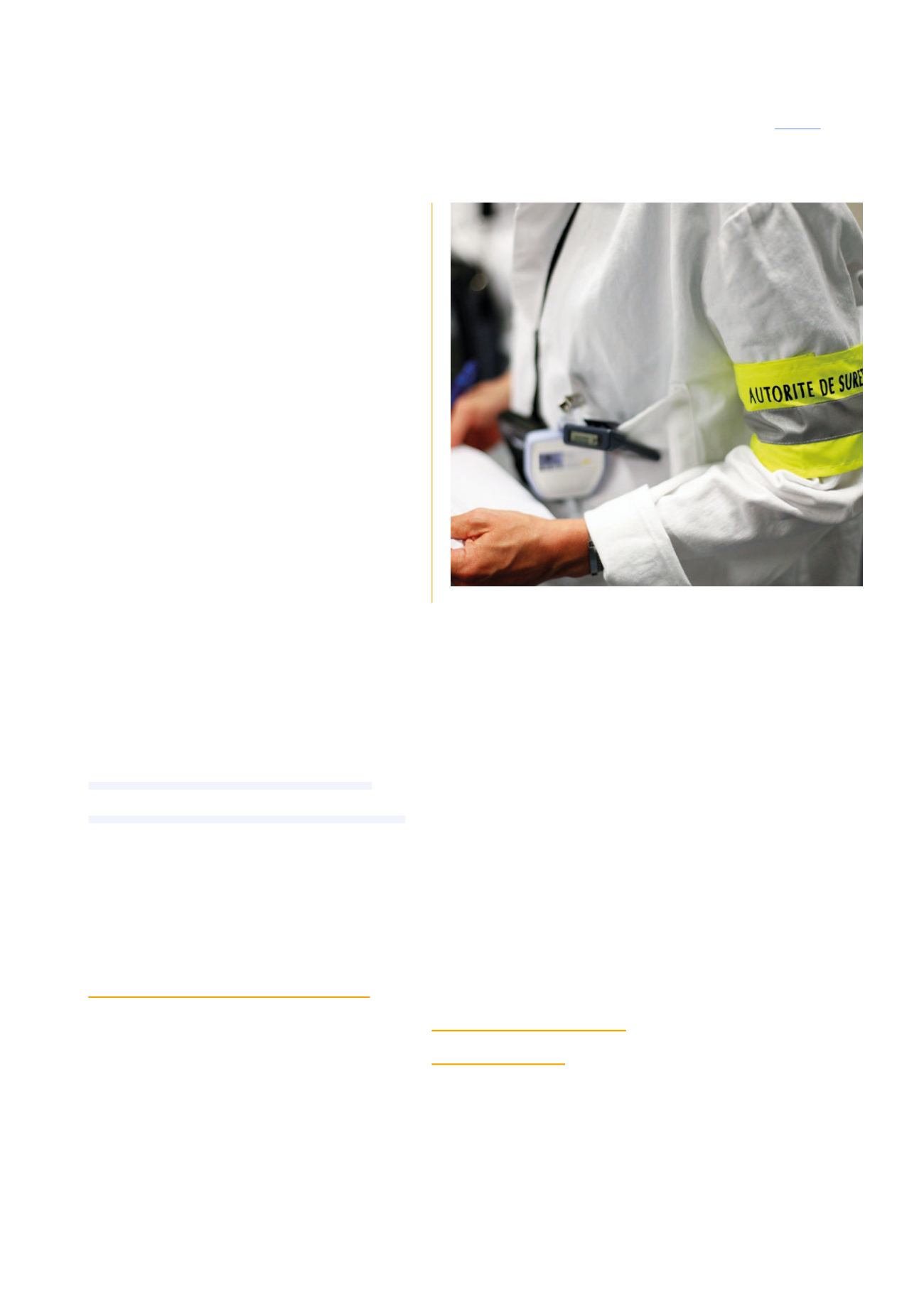
ASN inspection in the Arronax cyclotron (Saint-Herblain), July 2015.
133
CHAPTER 04:
REGULATION OF NUCLEAR ACTIVITIES AND EXPOSURE TO IONISING RADIATION
ASN report on the state of nuclear safety and radiation protection in France in 2015