


 272 / 536

NANTES DIVISION
involvement of medical physicists or the defining of dose
levels for risky or iterative procedures, procedures for
detecting deterministic effects and specific monitoring of
patients having undergone this type of procedure. With
regard to occupational radiation protection, continued
efforts are required in the quantification of doses and
protection of the lens of the eye and the extremities
of health professionals. Training on the whole is still
insufficient, both in occupational radiation protection
and patient radiation protection.
Lastly, these inspections show that the initiatives taken
with the Bretagne ARS (Regional Health Agency) to
write quality criteria into the multi-year agreements
on objectives and ressources of the healthcare centres
constitutes a good lever for enhancing integration of
the radiation protection requirements.
Nuclear medicine
Five nuclear medicine units were inspected in 2015.
The inspections focused on effluent management,
brachytherapy and control of the radiopharmaceutical
delivery process using automated preparation or injection
devices.
Despite the strong involvement of Persons Competent in
Radiation protection (PCR), application of the regulatory
requirements applicable to patient and worker radiation
protection is very variable. In the units where radiation
protection is not catered for satisfactorily, the employer
must ensure that the PCRs are allocated the means
and the time necessary to correct the deviations in
occupational radiation protection.
The conformity of the facilities with the requirements of
ASN resolution 2014-DC-0463 relative to the layout of
nuclear medicine units, applicable since 1st July 2015,
will be examined in depth in the next inspections.
Computed Tomography
Seven centres were inspected in 2015, with one of
the inspections concerning the specific activity of
teleradiology. The inspections concentrated more
particularly on patient radiation protection, which is
generally well implemented in the inspected centres.
Nevertheless, the tracking of personnel training in
patient radiation protection can be improved in half
the centres. The facility quality controls have been
carried out and patient dose optimisation protocols
have been established.
As regards occupational radiation protection,
improvements are required in the allocation of the
necessary means to the PCR, in the posting of restricted
area access instructions and rules, in the delineation of
restricted areas and the drafting of analyses of working
practices and conditions. Occupational dosimetric
monitoring is correctly ensured. Substantial efforts
remain to be made in occupational radiation protection
training, since only one of the centres inspected complies
with the applicable regulatory training frequencies.
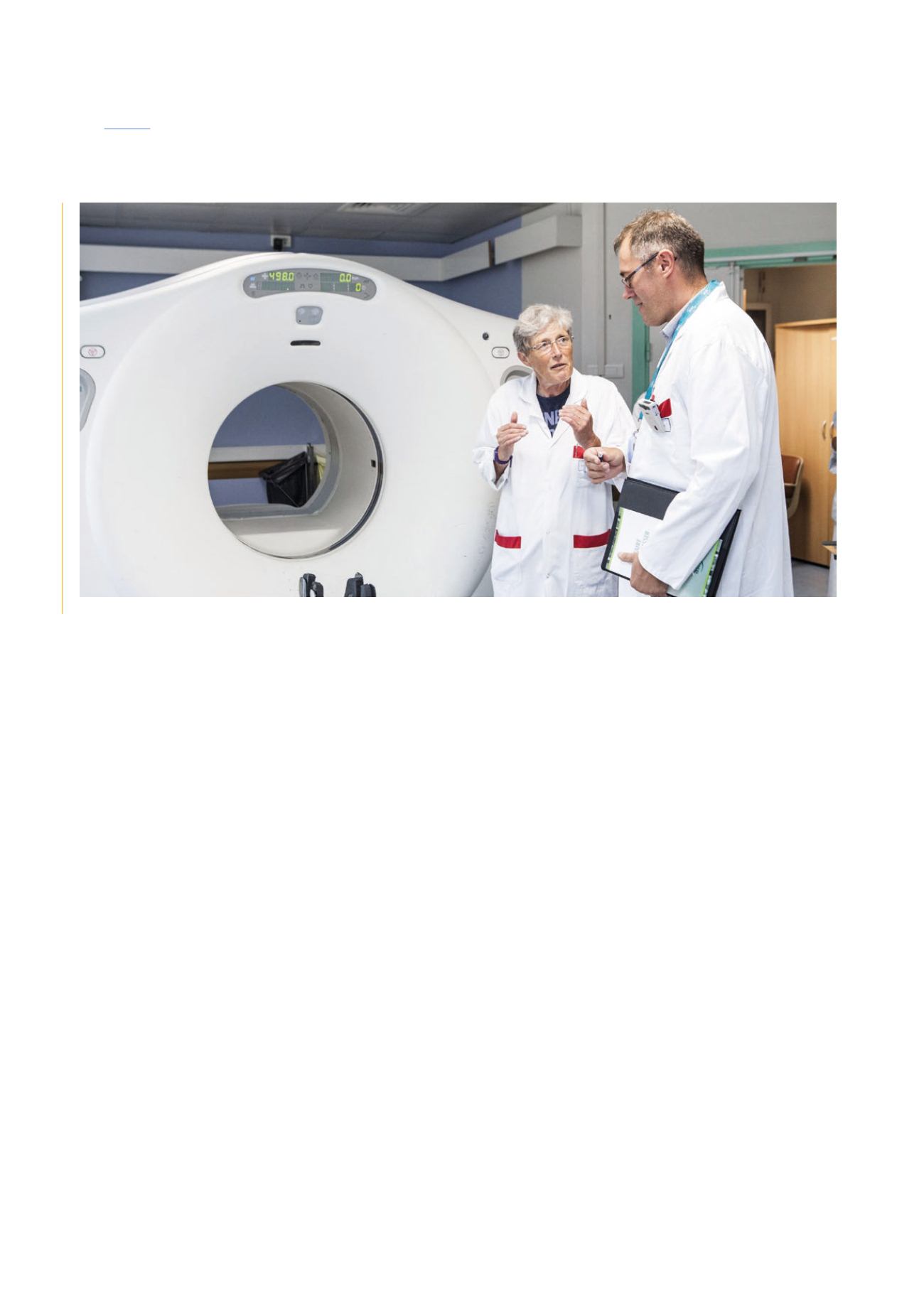
ASN inspection of the nuclear medicine unit of the Eugène Marquis regional cancer centre in Rennes, July 2015.
272
CHAPTER 08 :
REGIONAL OVERVIEW OF NUCLEAR SAFETY AND RADIATION PROTECTION
ASN report on the state of nuclear safety and radiation protection in France in 2015