


 33 / 536

EDF Nuclear Power Plants (NPPs)
12
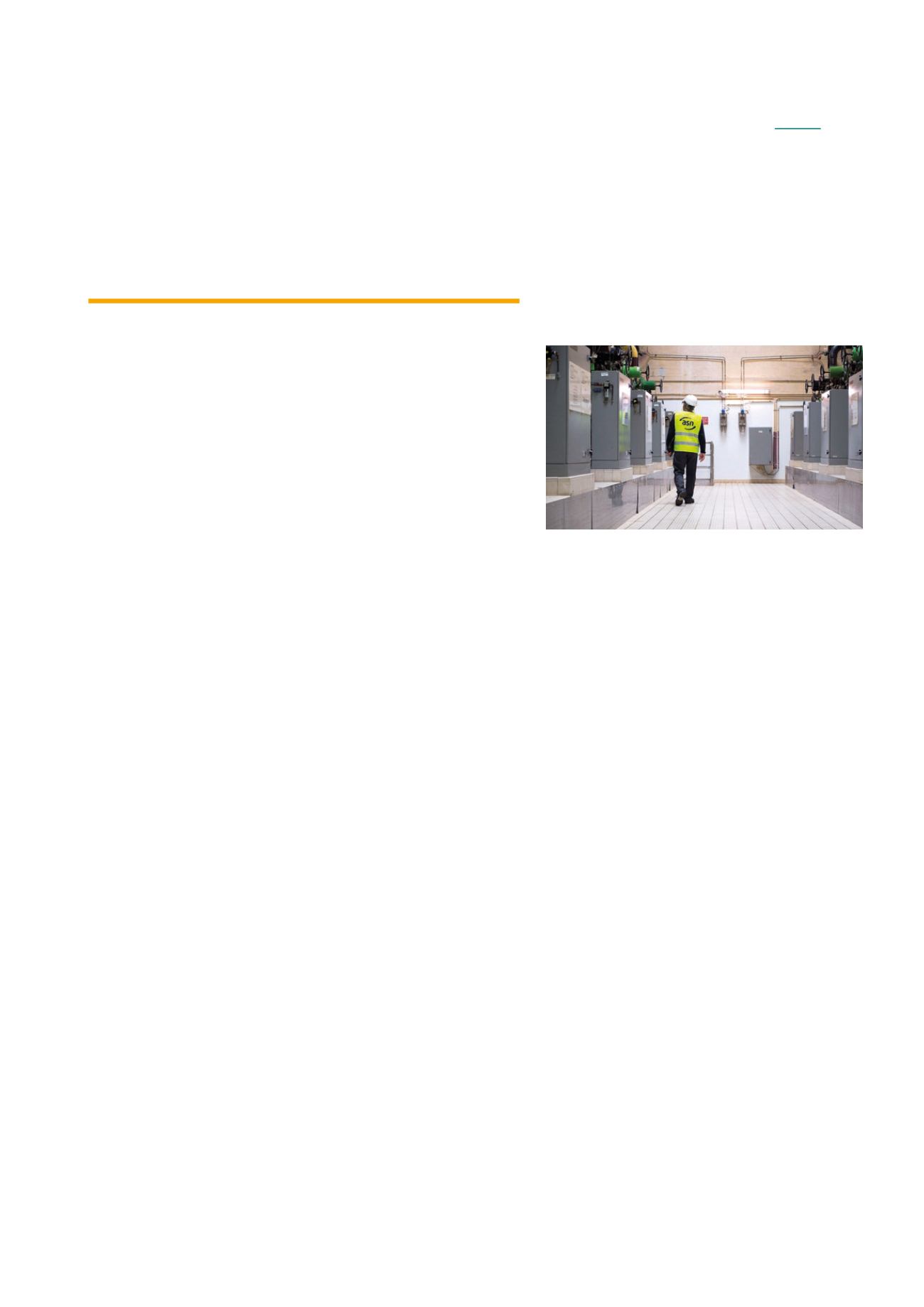
ASN imposes stringent safety
requirements on power reactors, the
regulation and oversight of which
mobilises nearly 200 of its staff and
asmany IRSNexperts onadailybasis.
ASN is developing an integrated
approach to regulation that coversnot
only the design of new installations,
their construction, modifications,
integration of feedback on events or
maintenanceproblems,butalsohuman
and organisational factors, radiation
protection,environmentalprotection,
worker securityand the applicationof
labour legislation.
Significant events
Experience feedback from
the Fukushima Daiichi accident
In the wake of the Fukushima
Daiichi accident, ASN issued a
set of resolutions requiring the
operators of major nuclear facilities
to perform stress tests. Further to
these stress tests, ASN issued a range
of resolutions in 2012, requiring
EDF to take additional steps to
reinforce the robustness of the
NPPs to extreme situations, more
specifically:
•
a «hardened safety core» able to
perform vital safety functions in
the event of hazards or unforeseen
circumstances exceeding those
adopted for the general design of
the facility;
•
aNuclear Rapid InterventionForce
(FARN)which, usingmobilemeans
external to the site, can intervene
on a nuclear site in a pre-accident
or accident situation;
•
a range of corrective measures
or improvements, notably
the acquisition of additional
communication and radiological
protectionmeans, the deployment
of additional instrumentation.
EDF first of all deployed temporary
or mobile measures to enhance
protection against the main
situations of total loss of the heat
sink or electrical power supplies.
EDF initiated studies designed to
deploy robust means on all the sites
to protect against extreme hazards in
order to deal with these situations.
NPP operating life extension
EDFmust carry out a periodic safety
reviewof its reactors every ten years.
This reviewconsists, on the onehand,
of a detailed check on designs and
equipment and, on the other, of a
reassessment of safety by comparison
with the most recent facilities and
international best practices. On
this occasion, EDF corrects the
deviations detected and identifies
the modifications it intends tomake
to reinforce the safety of its reactors.
On a case by case basis, ASN then
decides on the continued operation
of each reactor, if necessary issuing
additional prescriptions.
In 2015, ASN examined EDF’s
proposals for the continued
operation of the 900 MWe nuclear
reactors beyond their fourth ten-
yearly in-service inspection. This
is of particular importance as it
runs contrary to the initial design
hypotheses for a certain number
of equipment items. The studies of
the conformity of the installations
and the management of equipment
ageing must thus be reviewed,
taking account of the deterioration
mechanisms actually observed and
the maintenance and replacement
strategiesimplementedbythelicensee.
In March 2015, ASN ruled on the
generic aspects of the continued
operation of the 1,300MWe reactors
beyond thirty years. ASN considers
that the measures planned by EDF
to assess the condition of these
reactors and manage their ageing
are acceptable. ASN also considers
that the modifications identified by
EDF following this study phase will
make a significant improvement to
the safety of these installations.
In February 2015, ASN ruled on the
orientations of the periodic safety
reviewassociatedwith the second ten-
yearly in-service inspections of the
1,450MWe reactors. ASNinparticular
considers that the safety objectives to
be adopted for this review must be
defined in the light of the objectives
applicable to new reactors.
Flamanville 3 EPR
On 19thMarch 2015, ASN received
the commissioning authorisation
application for Flamanville 3. ASN
consideredthatadditionalinformation
was needed before it could rule on
this application,more specifically the
conformity of the as-built installation
with the file submitted, the design of
the systems or the accident studies.
Flamanville 3 EPR reactor vessel
anomaly
In late 2014, Areva NP informed
ASN that tests performed on a vessel
head representative of that intended
for the Flamanville EPR showed the
presenceof anareawithahighcarbon
concentration leading to lower than
expected mechanical properties.
Measurementsconfirmedthepresence
of this anomaly in the closure head
andbottomheadof theFlamanville3
EPR vessel.
33
ASN Report on the state of nuclear safety and radiation protection in France in 2015
SIGNIFICANT EVENTS IN 2015