


 343 / 536

Loss of control of the source
in gamma radiography
Gamma radiography is a non-destructive testing technique
consisting in positioning a radioactive source close to the
element to be inspected in order to obtain a radiographic
image which can subsequently be used to check the quality
of the part.
The loss of control of the sources is one of the main causes of
incidents in this field. It can lead to significant exposure of the
workers nearby, or even of the public if used in an urban area.
This loss of control is primarily encountered in two situations:
• The radioactive source remains jammed in its guide tube.
The cause of jamming is often the presence of foreign
bodies in the tube, or deterioration of the tube itself.
• The source-holder containing the radionuclide is no longer
connected to the remote control. The cable joining the
source and the remote control is not correctly connected
and the source can no longer be operated.
France has an inventory of gamma radiography devices
compliant with technical specifications that are stricter
than the international standards. However, equipment
failures can never be ruled out, especially in the event
of poor upkeep of the equipment. Operator errors are also
observed as being the cause of incidents.
ASN also notes that the procedures and steps to be taken
by the radiologists when faced with these situations are
insufficiently understood and adhered to.
UNDERSTAND
Number rated level 2
0
5
10
15
20
25
2011
2012
2013
2014
2015
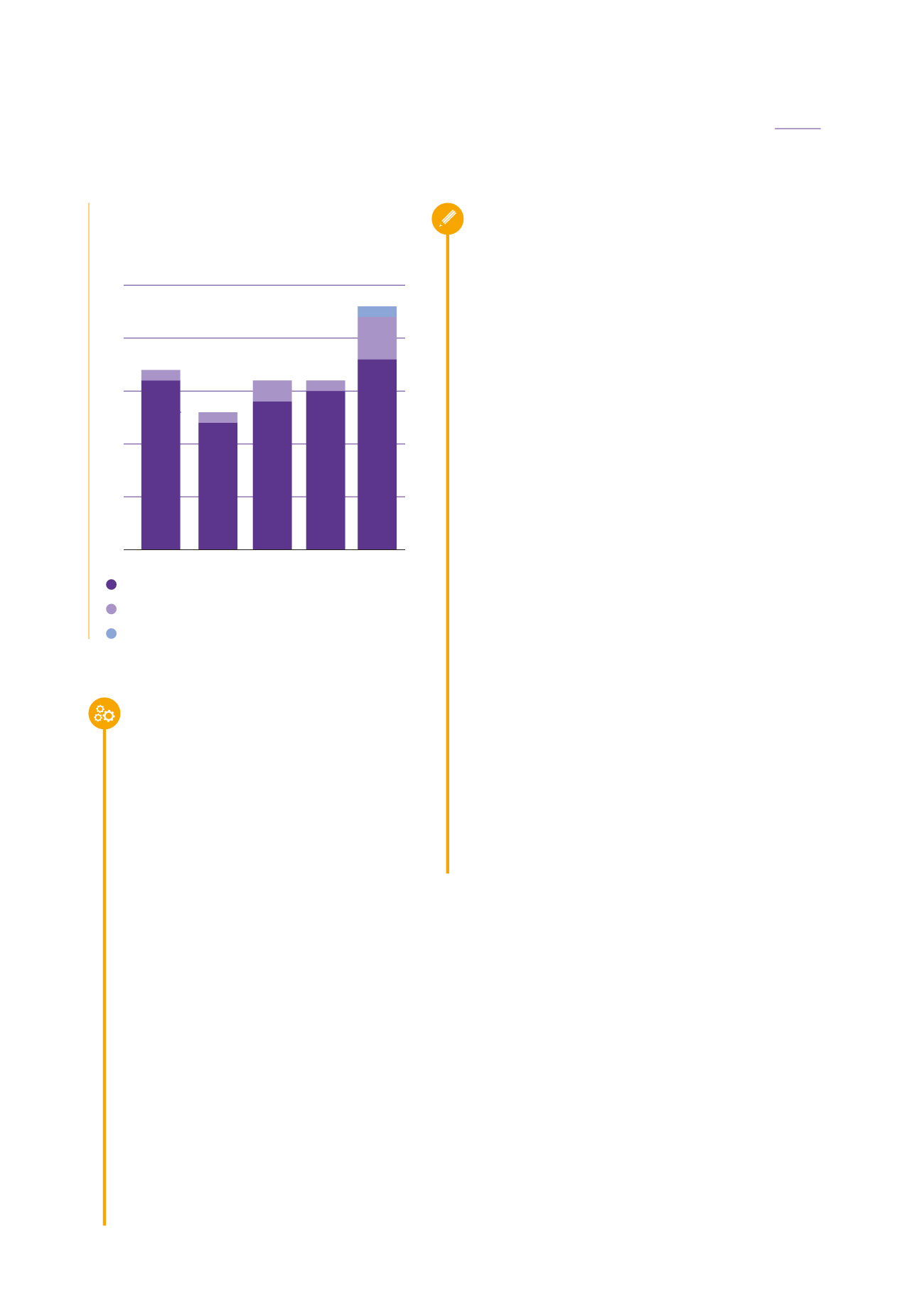
GRAPH 9:
Trends in the number of events notified to ASN
in the research sector
Number of facilities
Number rated level 1
Number of ESRs
Level 2 incident at Bordeaux University:
discovery of radioactive sources and incidental
exposure of persons
On 18th September 2015, Bordeaux University – Carreire
Campus – informed ASN of the discovery of two radioactive
sources in a room in the Inserm laboratory. The laboratory in
question has not had a license to hold radioactive sources for
many years now due to the cessation of its activities involving
radioactive sources.
The two radioactive sources were discovered by the Bordeaux
University prevention service in a very cluttered and regularly
frequented room during a housekeeping operation carried out
at the end of June 2015.
As soon as the sources were discovered, they were
transferred and placed in safe storage in a room provided for
that purpose within the university campus. On 4th September
the university’s radiation protection service conducted an
inspection to determine the radiological characteristics of the
retrieved sources. Risks of irradiation and contamination were
evidenced around one of the two sources, which displayed a
dose rate of 3.4 mSv/h in contact.
Radiological inspection of the room did not reveal any
radioactive contamination. On the other hand, according to
the first received dose estimates, one person working
in this room reportedly received a dose approaching
20 mSv/year and several others persons, having been
exposed more briefly, reportedly received a dose slightly
above the annual regulatory limit for the general public
(1 mSv). ASN conducted an inspection at Bordeaux
University on 1st October 2015 to examine the circumstances
of this event and asked that an action plan be undertaken to
prevent recurrence of a similar event.
The shortcomings in radiation protection culture and the dose
potentially received by the exposed persons led ASN to rate
this event level 2 on the INES scale.
TO BE NOTED
343
CHAPTER 10:
INDUSTRIAL, RESEARCH AND VETERINARY USES AND SOURCE SECURITY
ASN report on the state of nuclear safety and radiation protection in France in 2015