


 346 / 536

number of years now. At the end of 2015, ASN counted
some 3, 817 notified or licensed structures out of the
5,000 structures using ionising radiation in France.
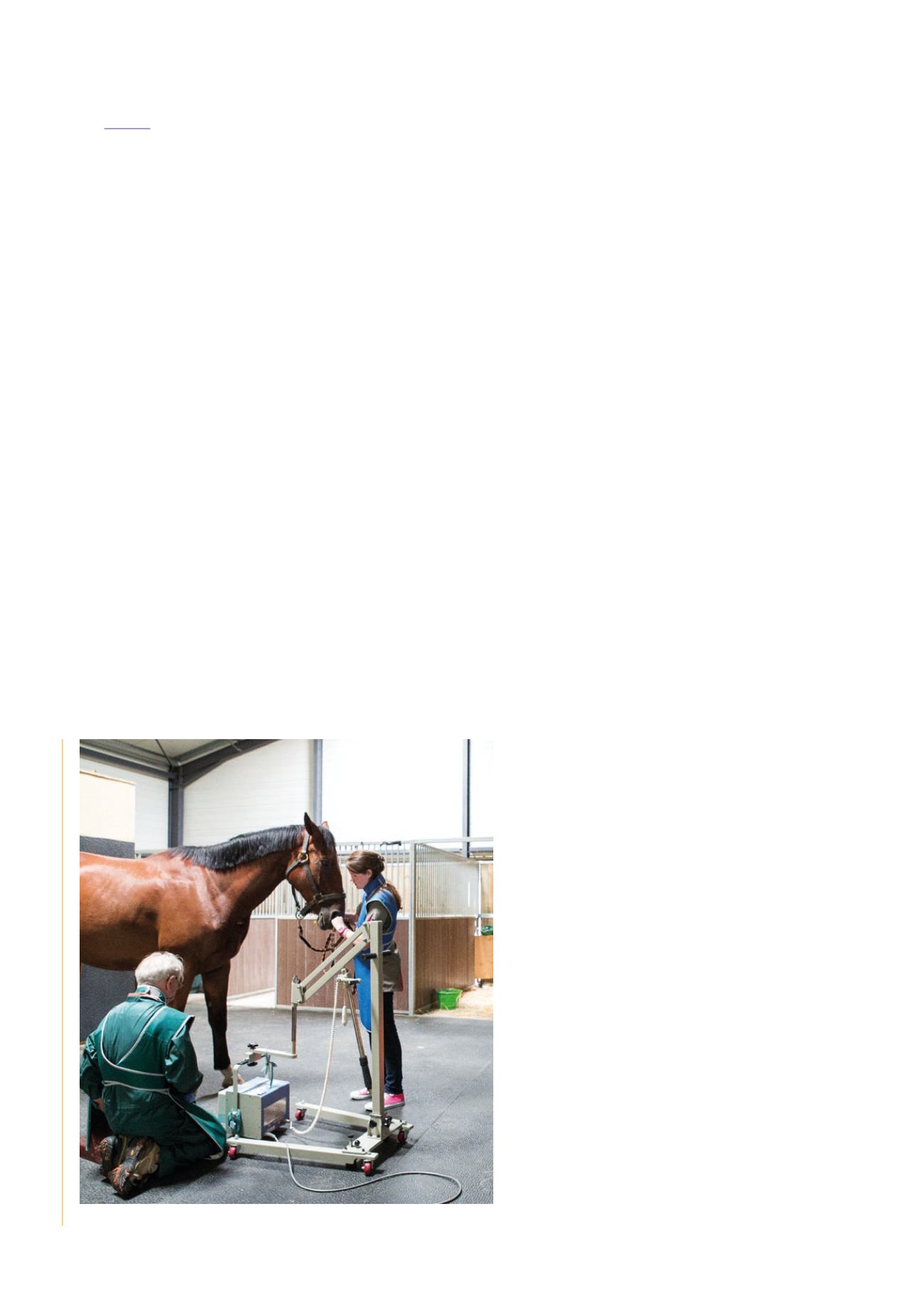
Of the veterinary activities, thoseperformedon large animals
(primarilyhorses)andoutsidespecialisedveterinaryfacilities
(in so-called “worksite” conditions), are considered to
be those with the highest potential radiation protection
implications, more specifically for persons from outside
the veterinary facility taking part in these interventions.
The inspections carried out by ASNonmore than 30%of
these veterinary structures as part of a national priority in
the inspectionprogramme revealed areas for improvement
inwhichASNremains vigilant when examining licensing
applications and performing inspections:
•
shortcomings in the applicationofworkermonitoringby
active dosimetry and in the internal radiationprotection
controls;
•
deficient and sometimes inexistent implementation of
radiological zoning;
•
the necessity to reinforce the radiation protection of
persons external to the veterinarypracticewhoparticipate
in the diagnostic radiology procedures;
•
an unsatisfactory administrative situation.
The result of the efforts made by the veterinary bodies in
the last fewyears to ensure conformitywith the regulations
have been confirmed by the inspectors who have noted
good fieldpractices in the inspected structures, andmore
specifically:
•
thepresenceof in-housePCRs in themajorityof structures;
•
the use of Personal Protective Equipment (PPE) almost
systematically;
•
an approach to optimise the conditions of diagnosis in
nearly all the structures.
The extensive nationwide commitment of the profession
to harmonising practices, raising awareness, training
student veterinary surgeons and drafting framework
documents and guides is seen in a very positive light
by ASN, which every year takes part in meetings with
the profession’s national bodies (more particularly the
veterinary radiation protection commission) jointly with
the General Directorate for Labour.
The conventional radiology activities performed on pets
(called “canine activities” inFrance) involve lesser radiation
protection implications but represent a very large number
of veterinary clinics. As part of its graded approachwhich
consists in adapting the control methods to the radiation
protection implications, ASNconducted an experimental
control campaignwhich called upon newdematerialised
control methods based on an on-line self-assessment
questionnaire. The campaign was carried out in seven
départements
(Aisne, Allier, Aube, Cantal, Haute-Loire,
Pas-de-Calais and Puy-de-Dôme). It will be pursued
by addressing requests for justificatory documents to a
limited number of veterinary structures and by carrying
out inspections.
The aim is to obtain a representative picture of radiation
protectioninthenumerousveterinarystructuresthatpractise
such conventional radiology activities and to identify those
structures on which ASNmust focus its efforts.
This inspection campaign, carriedout in close collaboration
with the Higher Council of the Order of Veterinarians,
started at the end of June 2015 and will continue until
2016.
Suppliers of ionising radiation sources
ASNconsiders that the regulatory oversight of suppliers of
electrical ionising radiation generators is still insufficient,
even thoughputting suchdevices on themarket is of prime
importance for optimising the future exposure protection
of the users of these devices (see point 4.4). The work
conducted by ASN in this area led to the publication of
ASN resolution 2013-DC-0349 of 4th June 2013 and
will be continued to propose a draft resolution setting
the technical requirements for the devices distributed
in France.
Cyclotrons
ASN has been exercising its oversight duty in this
field since early 2010; each new facility or major
modification of an existing facility is the subject of
a complete examination by ASN. The main radiation
ASN inspection in an equine veterinary clinic, November 2015.
346
CHAPTER 10:
INDUSTRIAL, RESEARCH AND VETERINARY USES AND SOURCE SECURITY
ASN report on the state of nuclear safety and radiation protection in France in 2015