


 420 / 536

1.1.2 Nuclear fuel fabrication plants
in Romans-sur-Isère
On completion of the uranium enrichment process, the
actual nuclear fuel is fabricated in various installations,
depending on the type of reactors for which it is intended.
The fabrication of fuels for electricity generating reactors
involves the transformation of UF
6
into uranium oxide
powder. The pellets fabricated from this powder in the
Areva NP plant in Romans-sur-Isère (BNI 98), are placed
in metal tubes to constitute the fuel rods, which will in
turn be grouped together to form fuel assemblies. The
fuels used in experimental reactors are more varied and
some of the for example, use highly-enriched uranium
in metal form. These fuels are fabricated the Areva NP
plant at Romans-sur-Isère (BNI 63).
The two BNIs located on the Romans-sur-Isère site,
previously operated by the FBFC company, have been
operated by the Areva NP company since 1st January
2015.
The FBFC nuclear fuel
fabrication plant – BNI 98
In recent years, the licensee hasmodified the organisation
of the units and begun the renovation of its industrial tool.
This renovation has in particular reduced the exposure
of the workers through improved containment of the
uranium powders used.
ASN is remaining vigilant with regard to the time taken to
complete the renovation projects for the uranium-bearing
material scrap recycling unit (R1) and the relocation of
the activities from the waste treatment unit (AX2). These
units entail major safety issues, in particular with respect
to the criticality risk and the risk of dissemination of
radioactive and chemical substances in the event of an
earthquake. This is why, in a resolution of 8th January
2015, ASN required that work be carried out in order to
ensure the conformity of these facilities or, failing which,
the removal of all radioactive materials.
The report on the periodic safety review of this facility,
submitted to ASN on 30th December 2014, is currently
being examined.
The Cerca nuclear fuel
fabrication plant – BNI 63
This plant is one of the oldest French nuclear facilities
still in service. There are major nonconformities in the
structures of the buildings and equipment by comparison
with current safety standards, in particular in terms of
the ability to withstand earthquakes, extreme climatic
events and stability in the event of fire. Despite ASN’s
repeated reminders since the 2006 periodic safety
review, Areva NP is struggling to begin the necessary
renovation work and has evenmentioned the possibility
of closing the facility within the next few years owing
ASN maintains reinforced monitoring
of the Areva plants in Romans-sur-Isère
Areva on the whole complied with the deadlines of the action
plan transmitted in 2014 and designed to reorganise how
it meets its commitments and improve safety management.
This work led the site to extensively revise the safety baseline
requirements of the two BNIs, which are now in conformity
with the state of the art of the nuclear sector.
Given the number and scale of the projects initiated
in the facility to improve the robustness of the equipment
and processes, ASN carried out reinforced monitoring
of the site in 2015.
On 8th January 2015, ASN issued a resolution setting
additional prescriptions for Areva NP concerning the
«hardened safety core» and management of emergency
situations, based on the lessons learned from the Fukushima-
Daiichi accident. This regulatory text also sets deadlines for
compliance with the main commitments in the two BNIs.
The conclusions of the ten-yearly reviews of BNIs 98 (FBFC)
and 63 (Cerca), planned for 2016 and 2017 respectively,
will enable ASN to issue a position statement on the
adequacy of the steps taken since the previous reviews.
TO BE NOTED
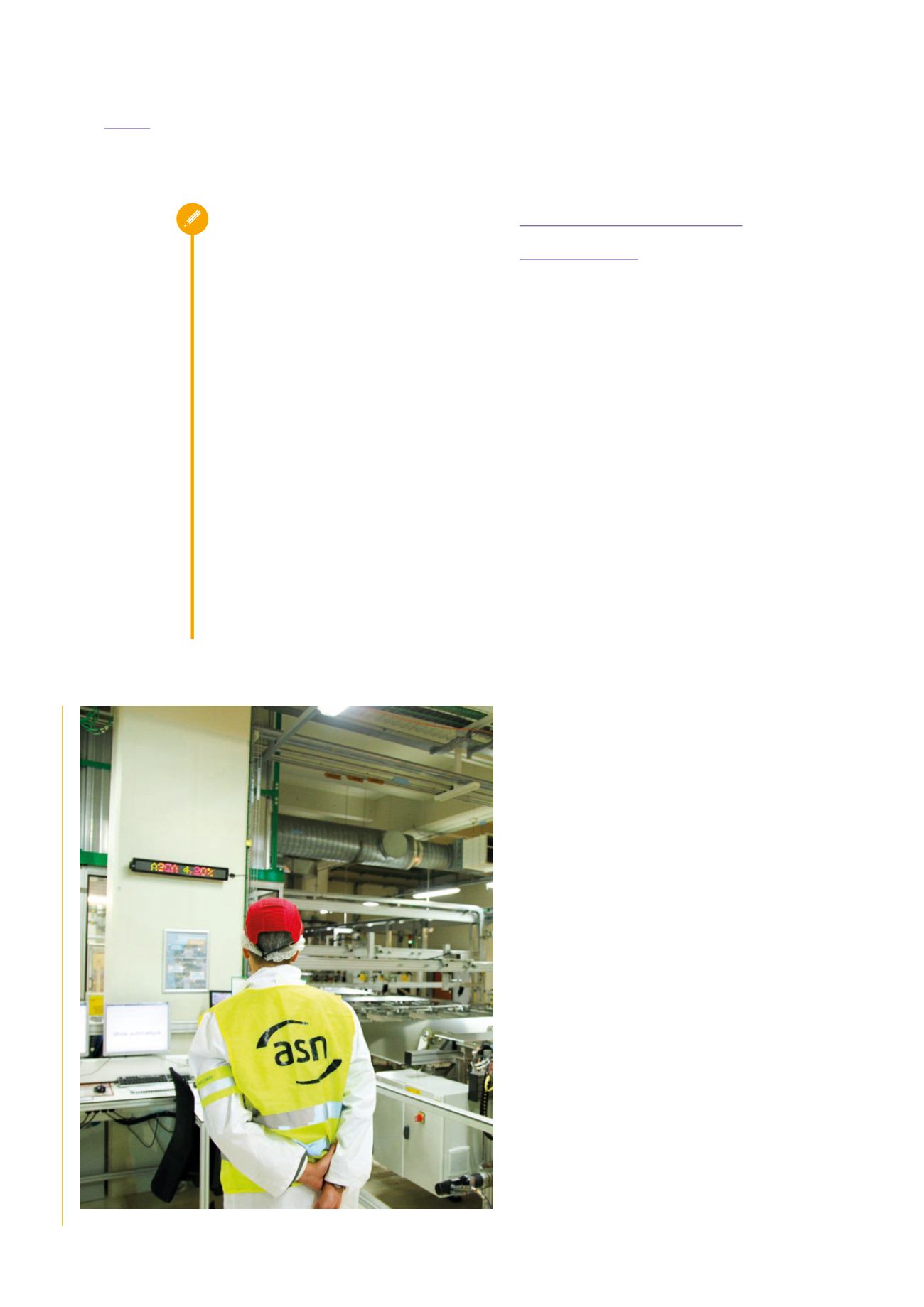
ASN inspection on the FBFC site, Romans-sur-Isère plant, October 2015.
420
CHAPTER 13:
NUCLEAR FUEL CYCLE INSTALLATIONS
ASN report on the state of nuclear safety and radiation protection in France in 2015