


 419 / 536

over the gaseous diffusion process used in the old Eurodif
plant: it consumes less electrical energy (75 MWe as
against 3,000 MWe for equivalent production) and is
safer, because the quantities of material present in the
centrifuge cascades are far smaller (6 tonnes in GB II
instead of 3,000 tonnes in Eurodif) and are utilised in
gas form at below atmospheric pressure.
The GB II plant comprises two separate enrichment
units (South and North units) and a support unit, the
REC II. In early 2009, ASN authorised commissioning
of the South enrichment facility. Today, all the cascades
in the South unit are in service.
The North unit is built along the same lines as the South
unit but only contains six rather than eight modules
and differs in that it is authorised to enrich the uranium
resulting from reprocessing of spent fuel in the first pair
of modules. The start-up authorisation for this facility
was given by ASN on 31st January 2013. Enrichment
of the uranium resulting from reprocessing has never
been implemented in the facility and requires prior
authorisation from ASN. The gradual start-up of the
enrichment cascades was virtually completed in 2015
under the supervision of the cascades start-up internal
authorisation committee, which functions satisfactorily.
The conclusions of the criticality risk inspection carried
out by ASN in 2014 were unsatisfactory and in 2015
ASN checked that the SET had taken steps to improve
its management of this risk.
ASN also authorised the commissioning of the unit
dedicated to the transfer, sampling and inspection of
nuclear material (REC II) in its resolution 2014-DC-0461
of 7thOctober 2014. This unit contains the main nuclear
safety and chemical issues of the GB II facility. In 2015,
ASN checked the conditions for the commissioning
of this facility. ASN considers that the reliability of the
facility’s operation needs to be improved.
The Georges Besse II plant displayed a satisfactory
standard of safety in 2015. The technologies utilised
in the facility enable high standards of safety, radiation
protection and environmental protection to be reached.
The Atlas facility
Decree 2015-1210 of 30th November 2015 authorised
Areva NC to create the Atlas BNI (Areva Tricastin analysis
laboratories). The purpose of this facility is to group the
activities currently performed by the industrial analysis
laboratories specific to the various Areva facilities on the
Tricastin and Romans-sur-Isère sites. The licensee then
submitted a commissioning authorisation application for
this BNI. This application is currently being examined
and the result should be made known in late 2016
– early 2017.
Grouping of the Tricastin site storage
areas within the same BNI
In 2012, Areva submitted a safety options file for the
Écureuil project for the creation on the Tricastin site
of an extension to the storage capacity for U
3
O
8
from
reprocessing, using existing and previously delicensed
buildings. ASN issued an opinion on the options file
in October 2013. This project was then abandoned by
the licensee.
In February 2015, Areva informed ASN that it wanted
to create a new BNI intended for management of the
stock of uranium-bearing materials on the Tricastin site.
After carrying out work to optimise the existing storage
facilities on the site, which enables the storage saturation
date to be pushed back from 2019 to 2021, Areva sent
ASN a safety options file in April 2015 concerning
the creation of new storage buildings to replace the
Écureuil
project. ASN issued a negative opinion on this
safety options file, which failed to take account of the
changes made to the regulations since 2012 and which
was based on obsolete natural hazards. Areva envisages
submitting a creation authorisation application for a
new BNI in late 2016.
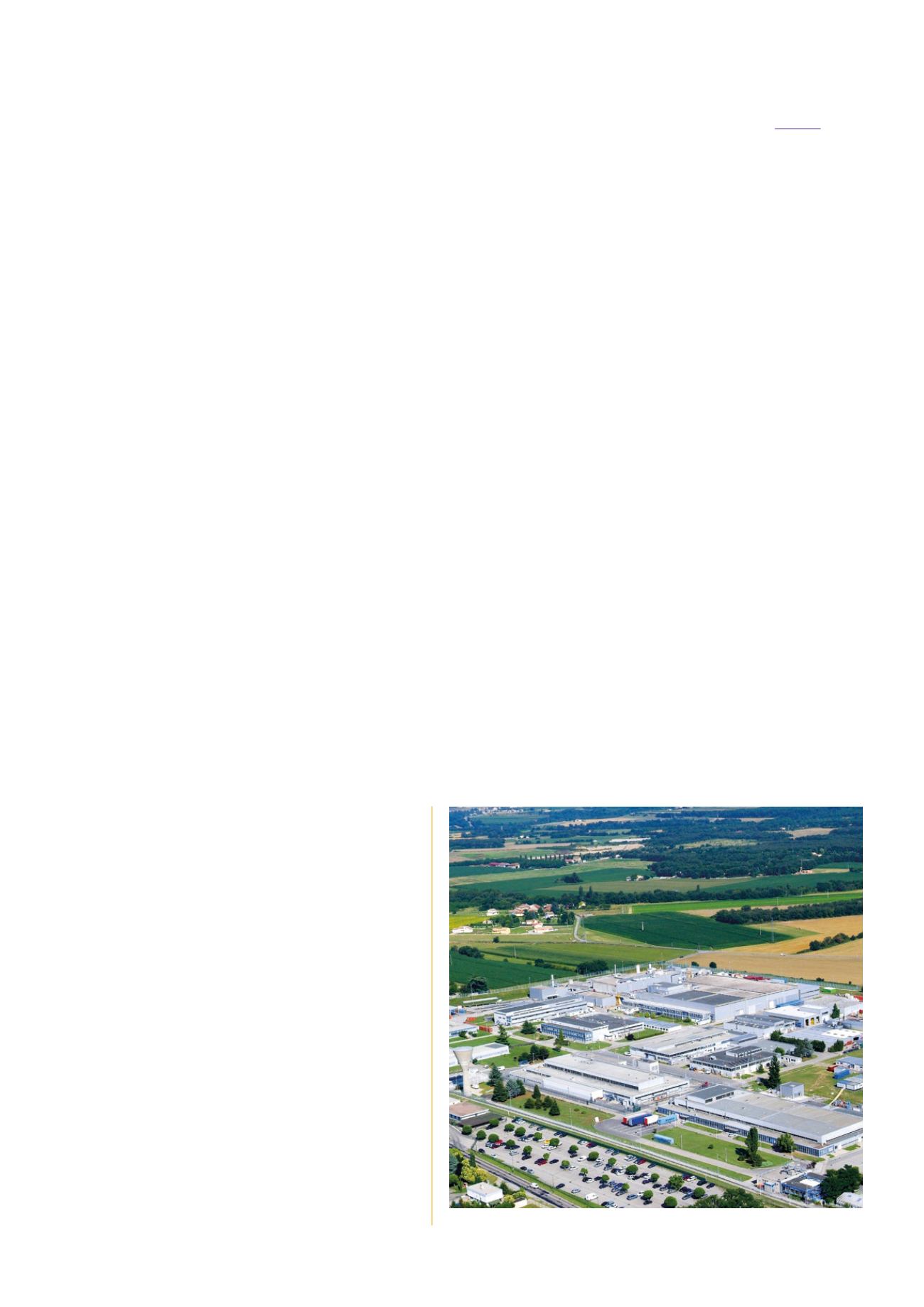
FBFC nuclear fuel fabrication plant in Romans-sur-Isère.
419
CHAPTER 13:
NUCLEAR FUEL CYCLE INSTALLATIONS
ASN report on the state of nuclear safety and radiation protection in France in 2015