


 506 / 536

ores such as monazite or zircons. Sites contaminated by
radioactive substances are managed on a case-by-case
basis, requiring a precise diagnosis of the site and the
contamination.
Several inventories of contaminated sites are available
to the public and are complementary: Andra’s national
inventory, which is updated every 3 years and comprises
the sites identified as contaminated by radioactive
substances (the June 2015 edition is available on
www.andra.fr)as well as the databases accessible from
the web portal of the Ministry responsible for the
Environment
(www.sites-pollues.ecologie.gouv.fr)
and
dedicated to contaminated sites and soils.
In October 2012, ASN finalised its doctrine specifying
the fundamental principles it has adopted for the
management of sites polluted by radioactive substances.
It thus considers that the reference procedure to adopt,
when technically possible, is to completely clean out
sites contaminated with radioactivity, even if the human
exposure induced by the radioactive contamination
seems limited.
ASN also believes that the solution involving the
contamination being maintained in-situ can only be an
interim solution or reserved for cases in which complete
clean-out cannot be envisaged owing, in particular, to
the volume of waste to be excavated.
ASN also considers that themanagement of contaminated
sites requires public involvement when choosing the
solution adopted, in order to create a climate of trust
and minimise conflicts.
ASN also points out that in application of the “polluter-
pays” principle written into the Environment Code, those
responsible for the contamination are responsible for
financing the operations to rehabilitate the contaminated
site and to remove the waste resulting from these
operations. If the responsible entities default, Andra,
on account of its public service remit and by public
requisition, ensures the rehabilitation of radioactive
contaminated sites.
Lastly, ASN reiterates in its doctrine for the management
of radioactive contaminated sites that any stance adopted
by ASN is duly justified and presented in complete
transparency to the stakeholders and the audiences
concerned.
2.1 Regulatory framework
Article 542-12 of the Environment Code specifies that
Andra is tasked inparticular with collecting, transporting
anddealingwith radioactivewaste and rehabilitating sites
with radioactive contamination at the request of and
expense of those responsible, or when requisitioned by
theGovernment if those responsible for thiswaste or these
sites have defaulted. Andra thus has a state subsidywhich
contributes to financing the missions of public interest
entrusted to it. The FrenchNational FundingCommission
for RadioactiveMatters (CNAR) was set upwithin Andra
in2007. It is chairedby theDirector-General of Andra and
includes representatives of the Ministries responsible for
the Environment, Energy and Health, of ASN, of IRSN,
of the Association of Mayors of France, of environmental
defence associations and qualified personalities.
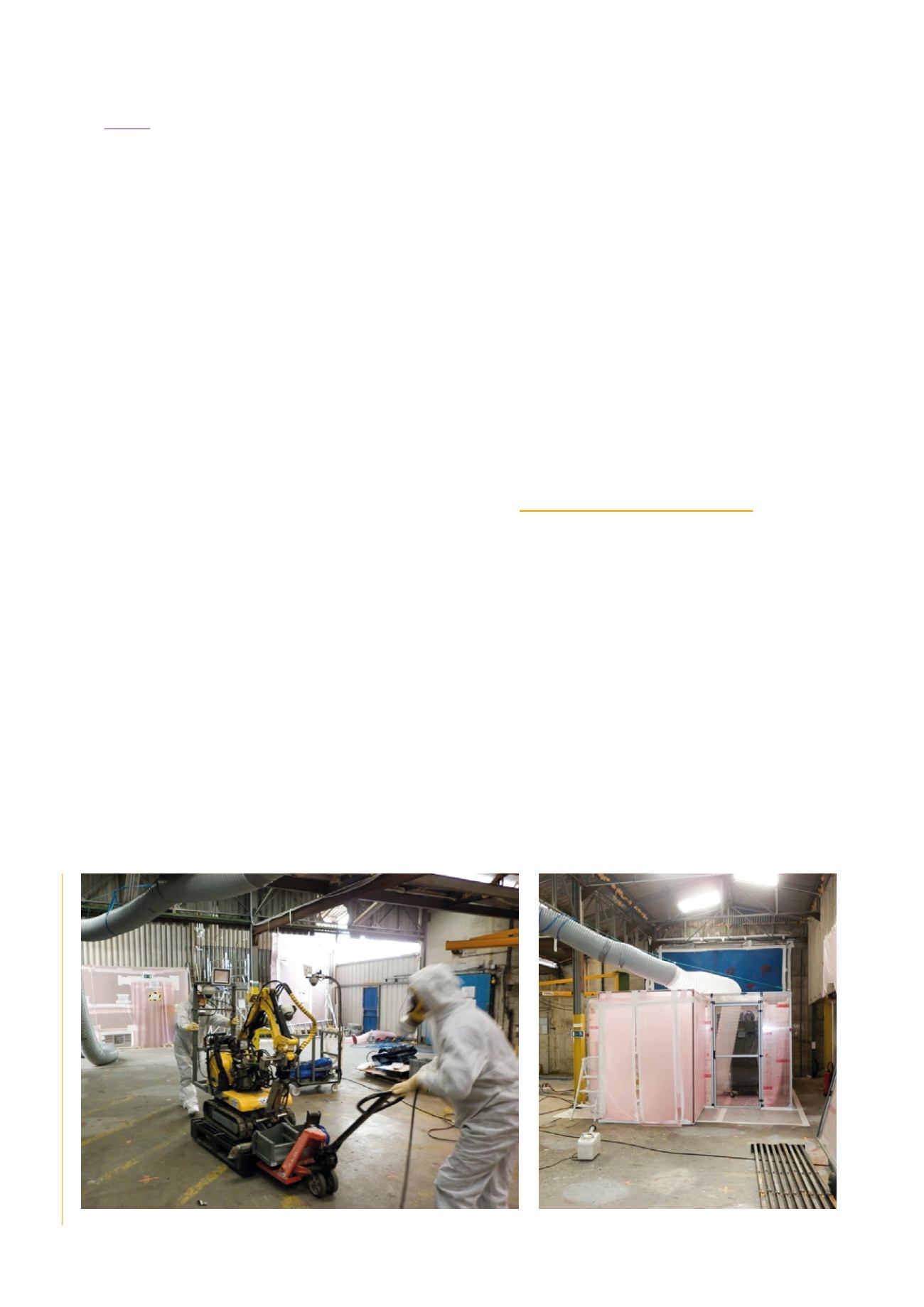
Site of the Feursmetal plant (Loire
département),
undergoing decontamination.
506
CHAPTER 16:
RADIOACTIVE WASTE AND CONTAMINATED SITES AND SOILS
ASN report on the state of nuclear safety and radiation protection in France in 2015