


 92 / 536

Article L. 1333-1 of the Public Health Code defines
nuclear activities as
“activities comprising a risk of human
exposure to ionising radiation related to the use either of
an artificial source, whether substances or devices, or of
a natural source, whether natural radioactive substances
or materials containing natural radionuclides. They also
include the steps taken to protect individuals from a risk
following radioactive contamination of the environment or
products from contaminated areas or manufactured from
contaminated materials”
.
Article L.1333-2 of the Public Health Code defines the
general principles of radiation protection (justification,
optimisation and limitation), established internationally
(ICRP) and incorporated into the IAEA requirements
and into Directive 2013/59/Euratom. These principles,
described in point 2 below, constitute guidelines for
the regulatory actions for which ASN is responsible.
The scope of application of Chapter III of Title III of
Book III of the first part of the Public Health Code
includes the measures necessary to prevent or mitigate
the risks in various radiological exposure situations:
In addition to steps taken to protect individuals from
a risk following radioactive contamination of the
environment or from products from contaminated
areas or manufactured from contaminated materials,
the steps taken in a radiological emergency situation or
in the event of exposure to a natural source of ionising
radiation, radon in particular, are also concerned. All
of these steps must now meet the justification and
optimisation principles.
The administrative regime described in this chapter will
change with the introduction of a simplified intermediate
authorisation procedure, called the registration
procedure, in addition to the existing notification and
authorisation procedures. These changes will allow a
graduated approach to risks to be adopted. A specific
Article (L. 1333-7) defining the protected interests has
been added. These interests are
“the protection of public
health, salubrity and safety, as well as of the environment,
against the risks or detrimental effects resulting from ionising
radiation. The risks to be considered are not only those
linked to the performance of the nuclear activity, but now
also those linked to malicious acts, from creation of the
activity to the phase following its cessation.”
The Public Health Code also institutes the radiation
protection inspectorate, in charge of verifying
compliance with its radiation protection requirements.
This inspectorate, set up and coordinated by ASN, is
presented in chapter 4. The Code also defines a system
of administrative and criminal sanctions, described
in the same chapter. Through the Ordinance of
10th February 2016, the Code was reinforced with the
creation of a complete system of monitoring, policing
and administrative and criminal sanctions, carried out
primarily by ASN and the radiation protection inspectors,
with reference to that mentioned in Chapter I of Title VII
of Book I of the Environment Code.
Environment Code
The Environment Code defines various notions.
According to Article L.591-1 of the Environment
Code, nuclear security is a concept comprising
“nuclear
safety, radiation protection, the prevention and fight against
malicious acts, and also civil protection actions in the event
of an accident”.
In some texts, however, the expression
“nuclear security” remains limited to the prevention
and mitigation of malicious acts.
Nuclear safety is
“the set of technical provisions and
organisational measures - related to the design, construction,
operation, shutdown and decommissioning of Basic Nuclear
Installations (BNIs), as well as the transport of radioactive
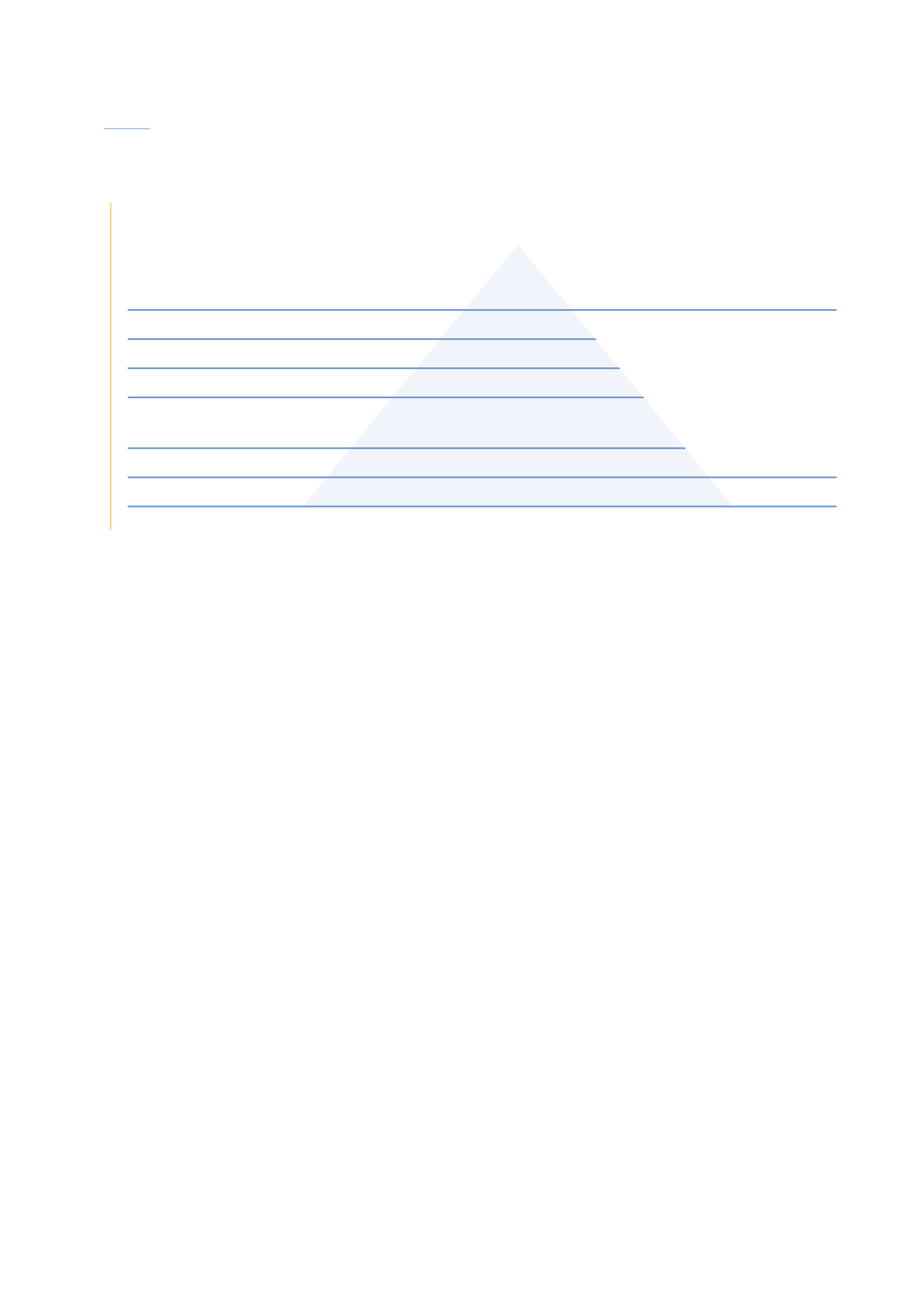
DIAGRAM 2:
Various levels of regulation in the field of small-scale nuclear activities in France
ICRP, IAEA, HERCA
Orientation,
Recommendations
European Commission
Directives
Parliament
Acts
Government
Decrees and Orders
ASN/
Government approval
Technical Statutory Resolutions
ASN
Individual Resolutions (Technical requirements)
ASN
ASN Guides/BSR*
Not legally binding
Legally binding
Not legally binding
* Basic Safety Rules.
92
CHAPTER 03:
REGULATIONS
ASN report on the state of nuclear safety and radiation protection in France in 2015