


 49 / 536

1.3 Scientific uncertainties
and vigilance
The action taken in the fields of nuclear safety and radiation
protectioninordertopreventaccidentsandlimitdetrimental
effects has led to a reduction in risks but not to zero risk,
whether in terms of the doses receivedbyworkers or those
associatedwithdischarges and releases fromBNIs.However,
many uncertainties persist and require that ASN remains
attentive to the results of the scientificwork inprogress, for
example in radiobiology and radiopathology, withpossible
consequences for radiation protection, particularly with
regard to management of risks at low doses.
One canmention, for example, several areas of uncertainty
concerning radiosensitivity, the effects of low doses, the
radiological signature of cancers and certainnon-cancerous
diseases observed in radiotherapy follow-ups.
1.3.1 Radiosensitivity
The effects of ionising radiation on personal health vary
from one individual to the next. Since it was stated for
the first time by Bergonié and Tribondeau in 1906, it is
for example known that the same dose does not have
the same effect when received by a growing child and
when received by an adult.
The variability in individual radiosensitivity to high doses
of ionising radiation has been extensively documented
by radiotherapists and radiobiologists. High levels of
radiosensitivity have been observed in subjects suffering
from genetic diseases affecting the repair of DNA and
cellular signalling; they could lead to “radiological burns”.
At low doses, there is both cell radiosensitivity and
individual radiosensitivity, which could concern
about 5 to 10% of the population. Recent methods of
immunofluorescence of molecular targets for signalling
and repairing DNA damage help to document the effects
of ionising radiation at lowdoses, reducing the detection
thresholds by a factor of 100. The biochemical and
molecular effects of a simple X-ray examination then
become visible andmeasurable. The results of the research
work conducted using these new investigationmethods
must be confirmed in the clinical environment before
being integrated into medical practices.
This then raises delicate issues, some of which go beyond
the strict context of radiation protection:
•
If tests for evaluating individual radiationhypersensitivity
become available, should screening prior to any
radiotherapy or repeated computed tomography
examinations be recommended?
•
Should one try to determine the degree of radiosensitivity
of workers who could be exposed to ionising radiation?
•
Should the general regulations provide for specific
protection for persons concernedby high radiosensitivity
to ionising radiation?
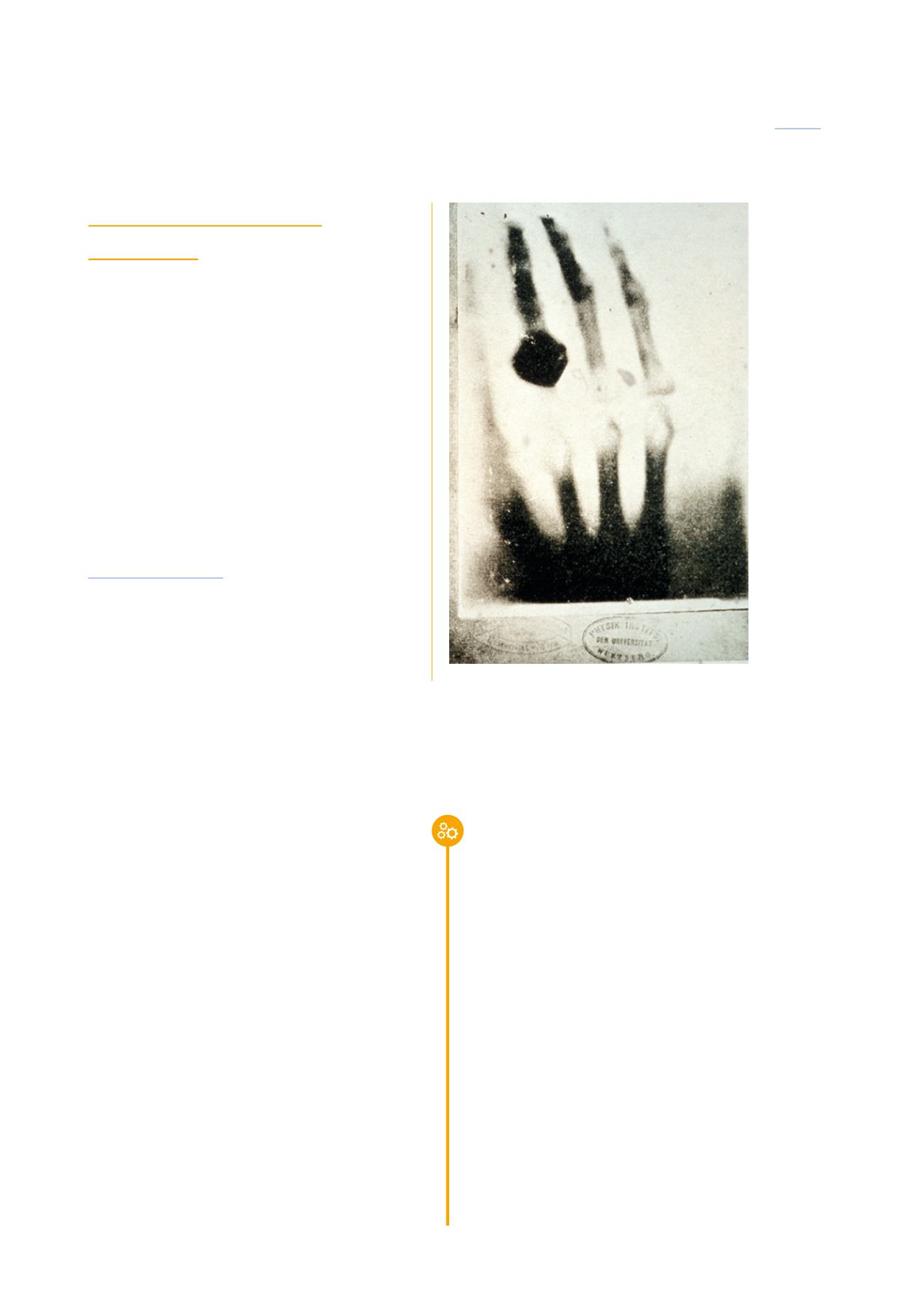
First X-ray of the hand of Mrs Roentgen, December 1895.
UNSCEAR
The United Nations Scientific Committee on the Effects of
Atomic Radiation (UNSCEAR) was set up in 1955 during the
10th session of the General Assembly of the United Nations.
It comprises representatives from 21 countries and reports to
the General Assembly of the United Nations. It is a scientific
organisation created to conduct global and regional studies
and evaluations of exposure to radiation and its effects on the
health of the exposed groups. The committee also studies the
progress made in understanding the biological mechanisms
whereby radiation influences health or the environment.
Latest publications since 2013:
• Sources, effects and risks of ionising radiation:
-- Vol. I - Annex A - Levels and effects of radiation exposure
due to the nuclear accident after the 2011 great east-Japan
earthquake and tsunami (2013).
-- Vol. II - Annex B - Effects of radiation exposure of children
(2013).
• Development since the UNSCEAR 2013 report relative to the
levels and effects of exposure to radiation due to the nuclear
accident in Japan in March 2011 (Fukushima Daiichi).
UNDERSTAND
49
CHAPTER 01:
NUCLEAR ACTIVITIES: IONISING RADIATION AND HEALTH AND ENVIRONMENTAL RISKS
ASN report on the state of nuclear safety and radiation protection in France in 2015