


 50 / 536

These questions have ethical implications owing to
the potential use of the results of individual radiation
sensitivity tests, for example to discriminate between
potential employees.
Whatever the case, there should be no unnecessary
exposure of individuals to ionising radiation, in other
words without justification. Children should receive
particularly close attention in the event of exposure to
ionising radiation for medical purposes.
After the publication in 2014 of the conclusions of the
seminar ASN organised on 16th December 2013, ASN
remains attentive to progress in the knowledge and
international reflections (IRCP in particular) to prepare
for the statutory resolutions that might or will have to
be taken.
1.3.2 Effects of low doses
The Linear No-Threshold (LNT) relationship.
This
hypothesis of this relationship, adopted tomodel the effects
of low doses on health (see point 1.2), albeit practical
from the regulatory standpoint, and albeit conservative
from the health standpoint, is not as scientifically well-
grounded as might be hoped for: there are those who
feel that the effects of low doses could be higher, while
others believe that these doses could have no effect below
a certain threshold, and some people even assert that low
doses have a beneficial effect. Research inmolecular and
cellular biology is progressing, as are epidemiological
surveys of large cohorts. But faced with the complexity
of the DNA repair and mutation phenomena, and the
methodological limitations of epidemiology, uncertainties
remain and the public authorities must exercise caution.
Dose, dose rate and chronic contamination.
The
epidemiological studies performed on individuals exposed
to the Hiroshima and Nagasaki bombings have given
a clearer picture of the effects of radiation on health,
concerning exposure due to external irradiation (external
exposure) received in a few fractions of a second at high
dose and high dose rate. The studies carried out in the
countries most affected by the Chernobyl accident
(Belorussia, Ukraine andRussia) were also able to improve
our understanding of the effects of radiation on health
caused by exposure through internal contamination
(internal exposure) more specifically through radioactive
iodine. Studies on nuclear workers have given a clearer
picture of the risk due to chronic exposure established
over many years, whether as a result of external exposure
or internal contamination.
Hereditary effect.
The appearance of possible hereditary
effects from ionising radiation in humans remains
uncertain. Such effects have not been observed among
the survivors of the Hiroshima andNagasaki bombings.
However, hereditary effects are well documented in
experimental work on animals: mutations induced
by ionising radiation in embryonic germ cells can be
transmitted to descendants. The recessive mutation of
one gene on one chromosome will produce no clinical
or biological indications as long as the same gene carried
by the other counterpart chromosome is not affected.
Although it cannot be absolutely ruled out, the probability
of this type of event nonetheless remains low.
Environmental Protection.
The purpose of radiation
protection is to prevent or mitigate the harmful effects of
ionising radiation on individuals, directly or indirectly,
including in situations of environmental contamination.
Over and beyond environmental protection aiming at the
protection of humans and present or future generations,
the protection of non-human species as such forms part
of the environmental protection prescribed in the French
constitutional Charter for the environment. This subject
has been taken into consideration by the ICRP since 2007
(ICRP 103) and the practical means of dealing with the
protection of nature in the specific interests of animal and
plant species has been the subject of several publications
since 2008 (ICRP 108, 114 and 124).
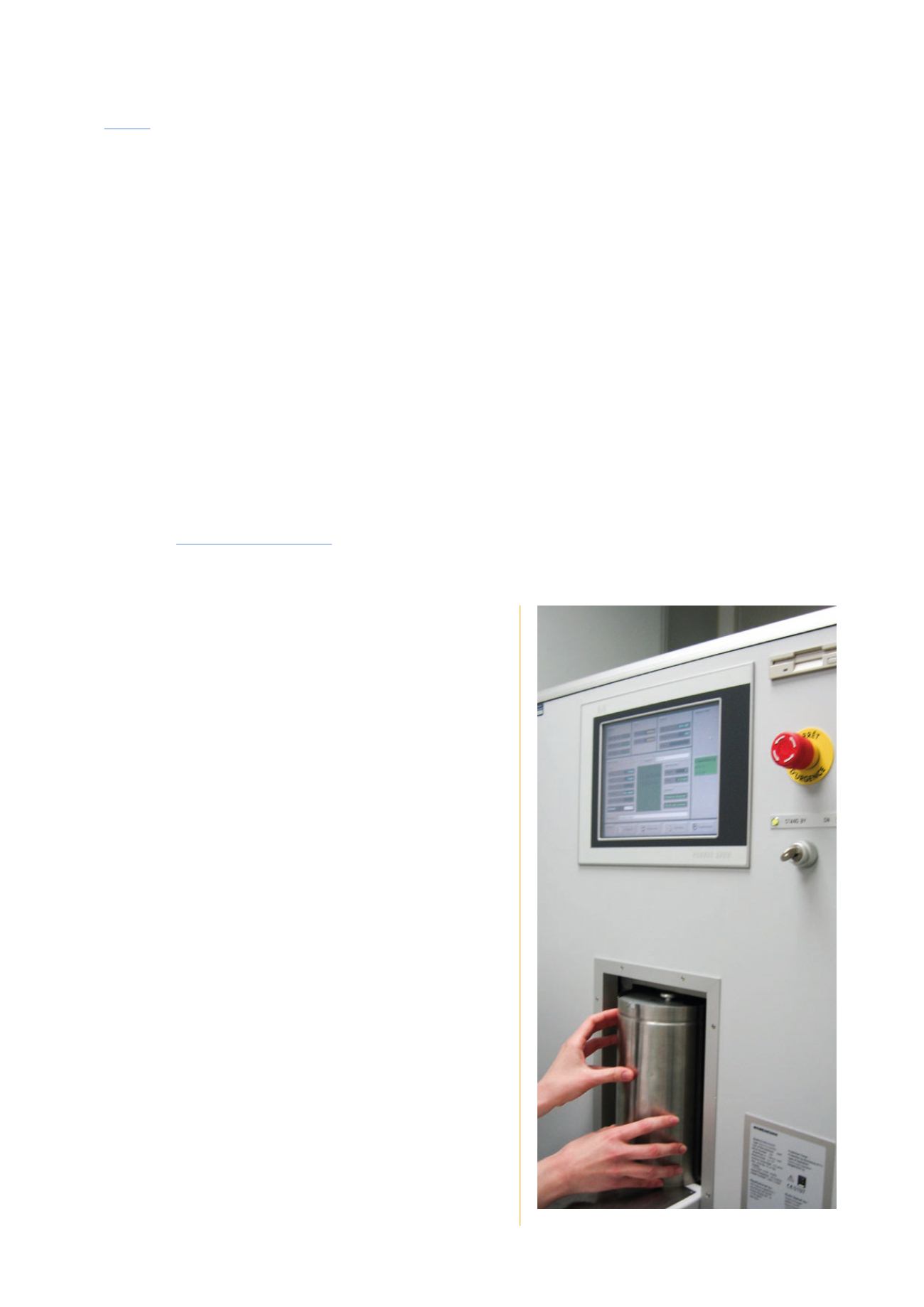
Blood cell irradiator.
50
CHAPTER 01:
NUCLEAR ACTIVITIES: IONISING RADIATION AND HEALTH AND ENVIRONMENTAL RISKS
ASN report on the state of nuclear safety and radiation protection in France in 2015