


 54 / 536

2.2.4 Radioactive waste management
Like all industrial activities, nuclear activities can
generate waste, some of which is radioactive. The three
fundamental principles on which strict radioactive
waste management is based are the accountability of
the waste producer, the traceability of the waste and
public information.
The technical management provisions to be implemented
must be tailored to the hazard presented by the radioactive
waste. This hazard can be assessed primarily through
two parameters: the activity level, which contributes
to the toxicity of the waste, and the half-life, the time
after which the activity level is halved.
Finally, management of radioactive waste must be
determined prior to any creation of new activities or
modification of existing activities in order to:
•
ensure the availability of processing channels for the
various categories of waste likely to be produced,
from the front-end phase (production of waste and
packaging) to the back-end phase (storage, transport
and disposal);
•
optimise the waste disposal routes.
2.2.5 Management of contaminated sites
Management of sites contaminatedby residual radioactivity
resulting either froma past nuclear activity or an activity
which generateddeposits of natural radionuclideswarrants
specific radiation protection actions, in particular if
rehabilitation is envisaged.
Depending on the current or future uses of the site,
decontamination objectives must be set and the removal
ofthewasteproducedduringpost-operationclean-outofthe
contaminatedpremises andremediationof thegroundmust
be managed, from the site through to storage or disposal.
The management of contaminated objects also follows
these same principles.
2.2.6 Industrial activities resulting
in the enhancement of natural ionising radiation
Exposure to ionising radiation of natural origin, when
increased due to human activities, justifies measures to
monitor or even to assess andmanage the risk, if it is likely
to create a hazard for the exposed workers and, where
applicable, the neighbouring population.
Thus, certain professional activities now included in the
definition of «nuclear activities» (see chapter 3), can
significantly increase the exposure to ionising radiation
of the workers and, to a lesser extent, of the populations
in the vicinity of the locations where these activities
are carried out, for example in the event of discharge
of effluents into the environment. This is in particular
the case with activities using rawmaterials or industrial
residues containing natural radionuclides which are not
used for their fissile or fertile radioactive properties.
The natural families of uranium and thorium are the
main radionuclides found. The industries concerned
include the phosphate mining and phosphated fertiliser
manufacturing industries, the dye industries, in particular
those using titanium oxide and those using rare earth
ores such as monazite.
The radiation protection actions required in this field are
based on the precise identification of the activities, the
estimation of the impact of the exposure on the individuals
concerned, and the implementation of corrective actions
to reduce this exposure if necessary and monitoring.
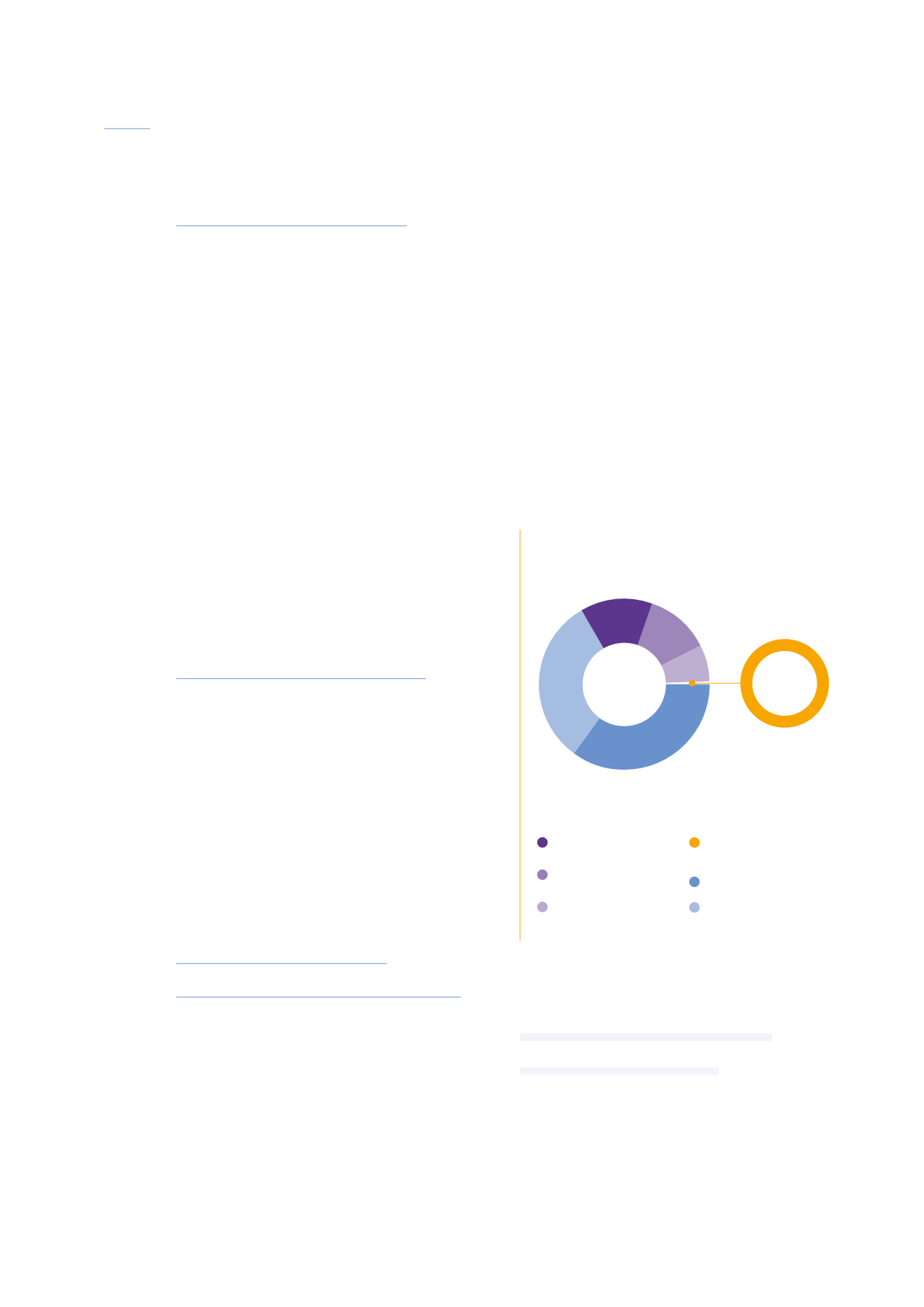
DIAGRAM 1:
The French population’s exposure to ionising radiation
(mSv/year)
Cosmic radiation
Water and foodstuffs
Telluric radiation
Radon
Medical
Total 4,5 mSv/an
Others (BNI discharges,
fallout from atmospheric testing)
Source: IRSN 2015.
1.6
1.4
0.6
0.6
0.3
0.02
3. MONITORING OF EXPOSURE
TO IONISING RADIATION
Given the difficulty in attributing a cancer solely to
the ionising radiation risk factor, “risk monitoring”
is performed by measuring ambient radioactivity
indicators (measurement of dose rates for example),
internal contamination or, failing this, by measuring
values (activities in radioactive effluent discharges) which
can then be used – by modelling and calculation – to
estimate the doses received by the exposed populations.
54
CHAPTER 01:
NUCLEAR ACTIVITIES: IONISING RADIATION AND HEALTH AND ENVIRONMENTAL RISKS
ASN report on the state of nuclear safety and radiation protection in France in 2015