


 60 / 536

IMAGING METHOD
PROCEDURES
COLLECTIVE EFFECTIVE DOSE
NUMBERS
%
MSV
%
Conventional radiology (dentistry excluded)
44,175,500
54.0
18,069,200
17.7
Dental radiology
27,616,000
33.8
165,700
0.2
Computed Tomography
8,484,000
10.4
72,838,900
71.3
Diagnostic interventional radiology
377,000
0.5
3,196,400
3.1
Nuclear medicine
1,103,000
1.3
7,928,300
7.8
TOTAL
81,755,500
100.0
102,198,500
100.0
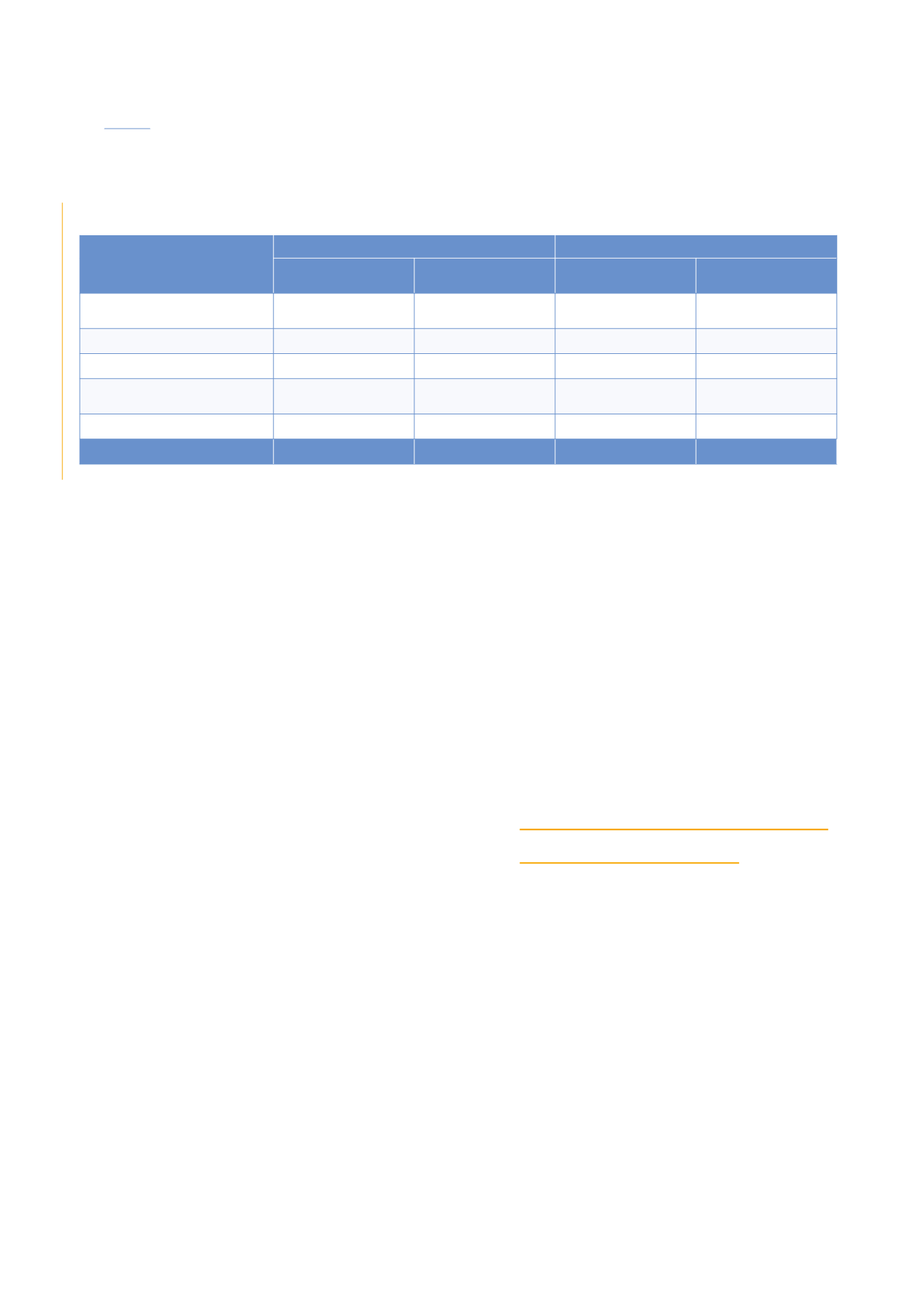
TABLE 3:
Total number of procedures and associated collective effective dose for each imaging method (rounded values) in France in 2012
Source: IRSN.
Conventional radiology (54%), computed tomography
(10.5%) and dental radiology (34%) account for the
largest number of procedures. However, the contribution
of computed tomography to the effective collective dose
remains preponderant andmore significant in 2012 (71%)
than in 2007 (58%) whereas that of dental radiology
remains very low (0.2%).
To give an example, thoracic and abdominal pelvic
CT scans remain themost frequent (50% in 2012 vs 30%
in 2007), more particularly inmen after the age of 50 years
(4.2% in 2012 vs 1.4% in 2007). Women underwent
more conventional radiology procedures (mammograms
and limb examinations) than men.
In adolescents, conventional radiology and dental
proceduresaremorenumerous(1,020and1,220procedures
respectively for 1,000 individuals in 2012). Despite their
frequency in this population, dental radiology procedures
represent only 0.5% of the collective dose.
It is noteworthy that in a sample of about 600,000 persons
covered by health insurance, 44% underwent at least
one diagnostic procedure in 2012. The analysis of the
effective doses for these peoplewho effectively underwent
an examination shows that 70% of them received less
than 1 mSv, 18% received between 1 and 10 mSv, 11%
between 10 and 50mSv and 1%more than 50mSv. The
substantial uncertainties in this study with regard to
the average effective dose values per type of procedure
must nevertheless be take into account, which justifies
progressing in the dose estimates in the next exposure
study of the general population.
Particular attention is required in order to control and
reduce the doses linked to medical imaging, more
specifically when alternative techniques can be used
for a same given indication, because the multiplication
of the most heavily irradiating examinations for the
same person could lead to the effective dose value of
several tens of millisieverts being reached; at this level of
exposure, certain epidemiological surveys have revealed
the occurrence of radiation-induced cancers.
Based on a sample of 100,000 children (1% of the
French population), IRSN (2013 report) estimated that in
2010, one out of three children was exposed to ionising
radiation for diagnostic purposes. The mean andmedian
values for the effective dose are estimated at 0.65 mSv
and 0.025mSv respectively for all the children exposed.
They are 5.7 mSv and 1.7 mSv respectively for children
who have undergone at least one computed tomography
procedure (1% of the population monitored).
Controlling the doses delivered to patients remains a
priority for ASN, which has undertaken – in collaboration
with the stakeholders (institutional and professional) –
a programme of actions in various areas (quality and
safety of practices/quality assurance, human resources/
training, etc.).
3.4 Exposure of non-human species
(animal and plant species)
The international radiation protection systemwas created
to protect humans against the effects of ionising radiation.
Environmental radioactivity is thus assessedwith respect
to its impact on human beings and, in the absence of any
evidence to the contrary, it is today considered that the
current standards also protect other species.
Protection of the environment from the radiological
risk and more specifically the protection of non-human
species, must however be guaranteed independently of
the effects on humans. Pointing out that this objective
is already incorporated in the national legislation, ASN
will ensure that the impact of ionising radiation on non-
human species be effectively included in the regulations
and in the authorisations for nuclear activities as soon as
evaluation methods are available. The opinion adopted
by the GPRADE in September 2015, based on the IRSN
appraisal report, is to be published in 2016.
60
CHAPTER 01:
NUCLEAR ACTIVITIES: IONISING RADIATION AND HEALTH AND ENVIRONMENTAL RISKS
ASN report on the state of nuclear safety and radiation protection in France in 2015