


 177 / 536

3.1.1 National nuclear and radiological emergency
exercises
In the same way as in previous years, and together
with the SGDSN, the DGSCGC and the ASND, ASN
has prepared a programme of national nuclear and
radiological emergency exercises for 2015, concerning
BNIs and RMT operations. This programme, announced
to the Prefects in the Interministerial Circular of
15th December 2014, took account of the lessons
learned from Fukushima Daiichi and the emergency
exercises performed in 2014.
Generally speaking, these exercises enable the highest-
level decision-making circles to be tested, along with the
ability of the leading players to communicate, sometimes
with simulated media pressure on them.
Table 2 describes the key characteristics of the national
exercises conducted in 2015.
In addition to the national exercises, the Prefects are
asked to conduct local exercises with the sites in their
département
, in order to improve preparedness for
radiological emergency situations, more specifically testing
the time needed to mobilise all the parties concerned.
The performance of a national nuclear and radiological
emergency exercise, at maximum intervals of five years
on the nuclear sites covered by a PPI, and at least one
annual exercise concerning RMT, would seem to be a fair
compromise between the training of individuals and the
time needed to effect changes to organisations.
The exercises enable those involved to build on knowledge
and experience in themanagement of emergency situations,
in particular for the 300 or so persons mobilised in the
field for each exercise.
For 2015, the objectives chosen in the annual Circular of
15th December 2014 concerning the national nuclear or
radiological emergency exercises were:
•
testing of international relations;
•
setting up an organisation to simulate the Government
level;
•
carrying out exercises in real meteorological conditions
whenever possible;
•
carrying out exercise scenarios for which thewriters are
given as few restrictions as possible;
•
testing the responseplan for amajornuclear or radiological
accident and implementing it if effective.
With regard to nuclear safety aspects:
•
continue to train expertswith focus on technical aspects;
•
carryout a safety exercisewithamalicious initiating event;
•
carry out an exercise involving several installations on
the same site;
•
carry out an exercise requiring ASN to issue an official
resolution;
•
bring in the licensees’ national intervention forces as
stipulated by the statutory resolutions.
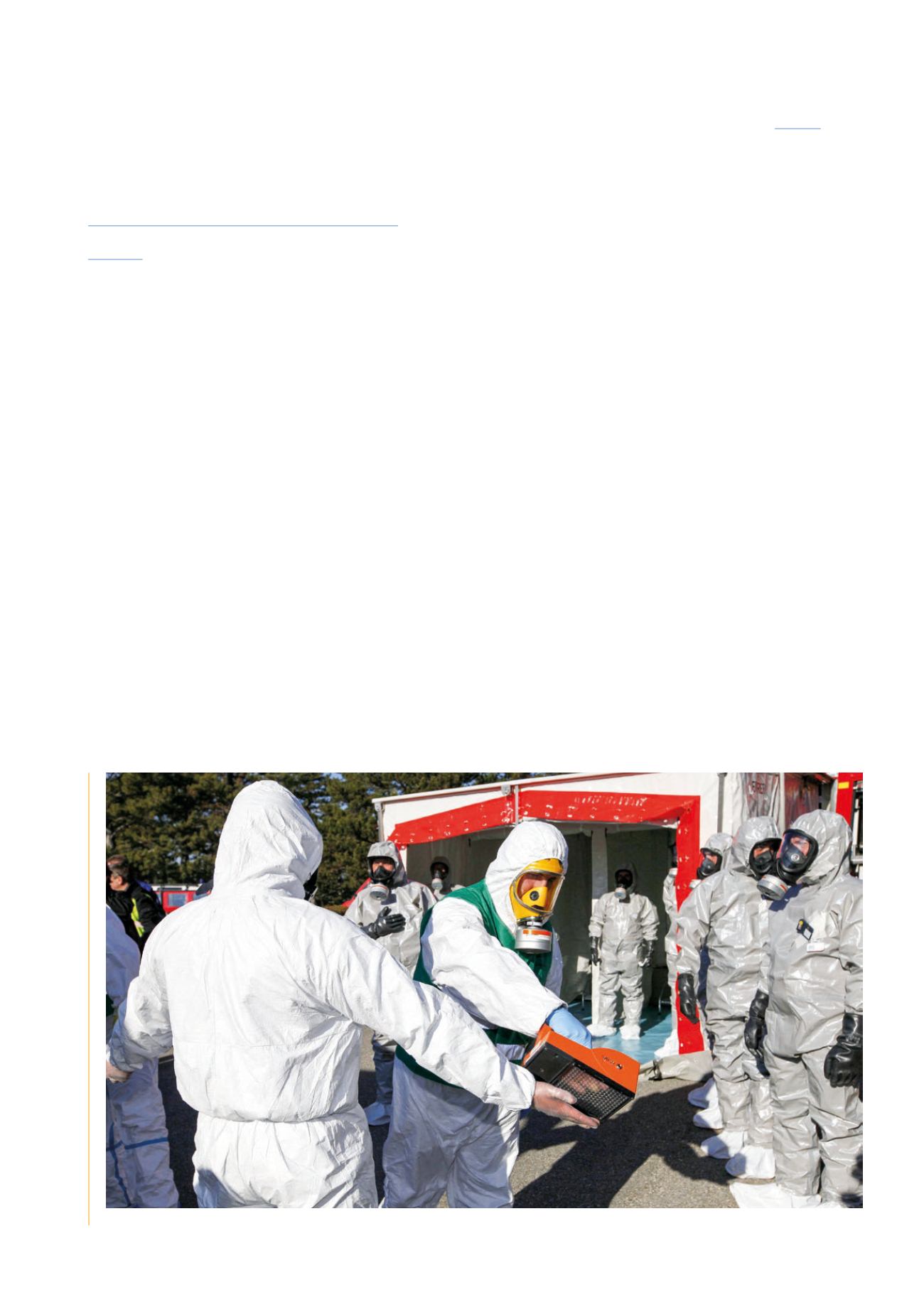
Check on contamination during a seismic exercise on the CEA site in Cadarache.
177
CHAPTER 05:
RADIOLOGICAL EMERGENCY AND POST-ACCIDENT SITUATIONS
ASN report on the state of nuclear safety and radiation protection in France in 2015