


 305 / 536

b - Pulsed Dose-Rate (PDR) brachytherapy:
•
delivering dose-rates of between 2 and 12 Gy/h;
•
using iridium-192 sources in the formof a source 3.5mm
long, 1 mm in diameter and with maximum activity of
18.5GBq, implementedwitha specific source afterloader.
This technique requires patient hospitalisation for several
daysinaroomwithradiologicalprotectionappropriateforthe
maximumactivity of the radioactive source used. It is based
ontheuseofasingleradioactivesourcewhichmovesinsteps,
andstopsinpredeterminedpositionsforpredeterminedtimes.
The doses delivered are identical to those of low dose-
rate brachytherapy, but are delivered in sequences of
5 to 20 minutes, or sometimes even 50 minutes, every
hour for the duration of the planned treatment, hence
the name pulsed dose-rate brachytherapy.
Pulseddose-rate brachytherapy offers a number of radiation
protection advantages:
•
no handling of sources;
•
no continuous irradiation, which enables the patient
to receive medical care without irradiating the staff or
having to interrupt the treatment.
However, it is necessary tomake provisions for accident
situations related to the operation of the source afterloader
and to the high dose-rate delivered by the sources used.
c - High Dose-Rate (HDR) brachytherapy:
•
delivering dose-rates in excess of 12 Gy/h;
•
using iridium-192 sources in the form of a source
3.5 mm long, 1 mm in diameter and with maximum
activity of 370GBq, implementedwith a specific source
afterloader. Some recently installed source afterloaders
use a high-activity (91 GBq) cobalt-60 source.
This technique does not require patient hospitalisation
in a room with radiological protection and is performed
on an outpatient basis, in a room with a configuration
comparable to that of an external- beam radiotherapy
room. The treatment is performed with an afterloader
containing the source and involves one or more sessions
of a fewminutes, spread over several days.
High dose-rate brachytherapy is used mainly for
gynaecological cancers. This technique is being developed
for treatment of prostate cancers, usually in association
with an external beam radiotherapy treatment.
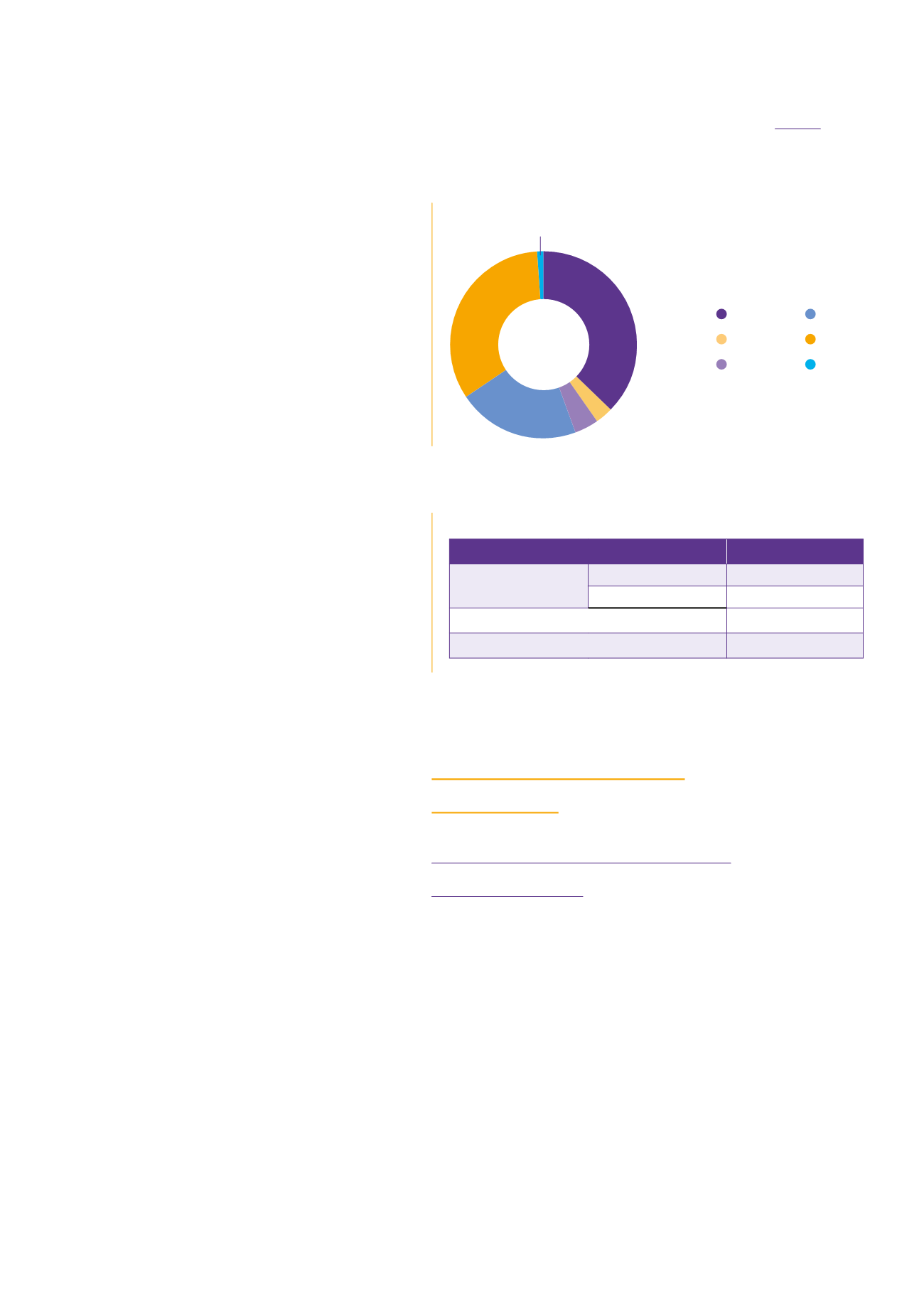
d - Brachytherapy in France
In 2013, 64 radiotherapy centres held an ASN license to
performbrachytherapy treatments. These 64 centres are
spread over the French territory as a whole (metropolitan
France and its overseas
départements)
covering two sectors:
60%of the centres belong to the public or non-profit private
health care (ESPIC) sector and 40% to the private sector.
The number of centres using these different techniques
at the end of 2014 is indicated in table 4.
3.2 Technical rules applicable
to installations
3.2.1 Technical rules applicable to external-beam
radiotherapy installations
Thedevicesmust be installed inrooms speciallydesigned to
guaranteeradiationprotectionofthestaff,turningtheminto
veritablebunkers(wallthicknesscanvaryfrom1mto2.5m
ofordinaryconcrete).Aradiotherapyinstallationcomprises
a treatment roomincluding a technical area containing the
treatment device, a control station outside the room and,
for some accelerators, auxiliary technical premises.
The protection of the premises, in particular the treatment
room, must be determined in order to respect the annual
exposure limits for the workers and/or the public around
the premises. A specific studymust be carried out for each
installation by the machine supplier, together with the
medical physicist and the PersonCompetent in Radiation
protection (PCR).
This study defines the thicknesses andnature of the various
protections required, which are determined according
to the conditions of use of the device, the characteristics
DISTRIBUTION
of brachytherapy centres according to status in 2013 (%)
CLCC
HIA
CHU
CH
Other ESPIC
Private
37
3
4
21
33
1
TECHNIQUE USED
NOMBER DE CENTRES
Low dose-rate
Iodine seed
38
Cs-137 afterloader
10
PDR
23
HDR
39
TABLE 4:
Number of centres using the different brachytherapy techniques
Source: ASN 2014.
305
CHAPTER 09:
MEDICAL USES OF IONISING RADIATION
ASN report on the state of nuclear safety and radiation protection in France in 2015