


 326 / 536

1.1.4 Neutron activation
Neutron activation consists in irradiating a sample with a
flux of neutrons to activate the atoms in the sample. The
number and the energy of the gamma photons emitted
by the sample in response to the neutrons received
are analysed. The information collected enables the
concentration of atoms in the analysed material to be
determined.
This technology is used in archaeology to characterize
ancient objects, in geochemistry for mining prospecting
and in industry (study of the composition of
semiconductors, analysis of rawmixes in cement works).
Given the activation of thematerial analysed, this requires
particular vigilance with regard to the nature of the
objects analysed. Article R. 1333.3-of the Public Health
Code in fact prohibits the use of materials and waste
originating from a nuclear activity for the manufacture of
consumer goods and construction products, if they are
or could be contaminated by radionuclides, including
by activation (see point 4.3).
1.1.5 Other common applications
Sealed sources can also be used for:
•
eliminating static electricity;
•
calibrating radioactivitymeasurement devices (radiation
metrology);
•
practical teaching work concerning radioactivity
phenomena;
•
detectionby electroncapture. This techniqueuses sources
of nickel-63 in gaseous phase chromatographs and can
be used to detect and dose various chemical elements;
•
ionmobility spectrometry used indevices that are often
portable and used to detect explosives, drugs or toxic
products;
•
detection using X-ray fluorescence. This technique is
particularly useful indetecting lead inpaint. The portable
devices used today contain sources of cadmium-109
(half-life 464 days) or cobalt-57 (half-life of 270 days).
The activity of these sources can range from400MBq to
1,500MBq. This technique, which uses a large number
of radioactive sources nationwide (nearly 4,000 sources),
is the result of a legislative systemdesigned to prevent
lead poisoning in children by requiring a check on
the lead concentration in paints used in residential
buildings constructed before 1st January 1949, on the
occasion of any sale, any new rental contract or in the
case of work significantly affecting the coatings in the
common parts of the building.
0
100
200
300
400
500
600
700
800
Calibration
Density measurement and weighing
Thickness measurement
Atmospheric dust measurement
Thickness of thin layers
Basis weight determination
Level measurement
Density measurement and weighing
Diagraphy (logging)
Elimination of static electricity
Implementation of neutron sources
Analysis
Teaching
Research
Chromatography
Electron capture detectors
Gamma radiography
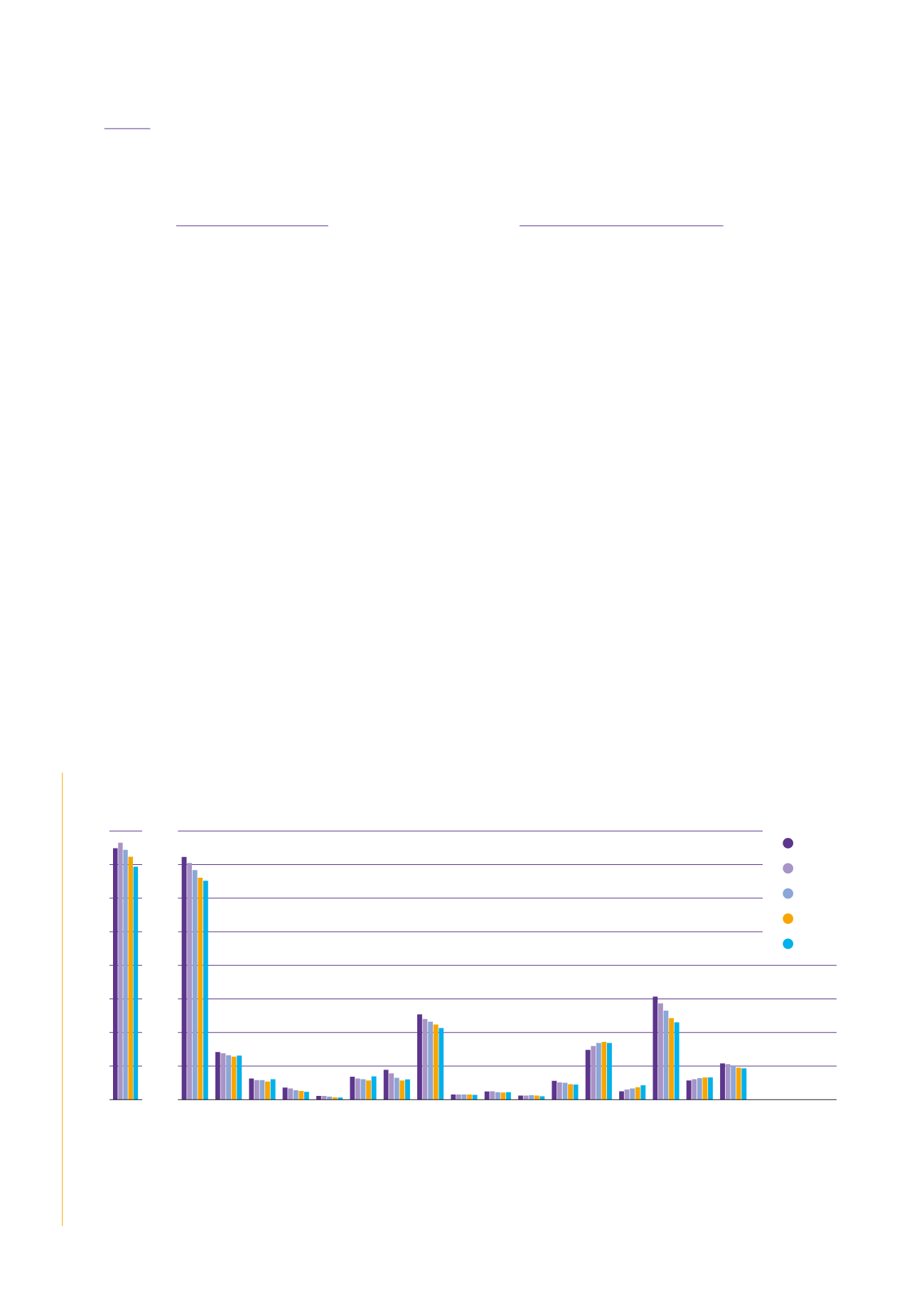
GRAPH 1:
Use of sealed radioactive sources
0
500
1,000
1,500
2,000
2,500
3,000
3,500
4,000
X-ray fluorescence analysis
Calibration
Density measurement and weighing
Thickness measurement
Atmospheric dust measurement
Thickness of thin layers
Basis weight determination
Level measurement
Density measurement and weighing
Diagraphy (logging)
Elimination of static electricity
Implementation of neutron sources
Analysis
Teaching
Research
Chromatography
Electron capture detectors
Ga magraphy
Number of facilities licensed
2014
2015
2013
2012
2011
326
CHAPTER 10:
INDUSTRIAL, RESEARCH AND VETERINARY USES AND SOURCE SECURITY
ASN report on the state of nuclear safety and radiation protection in France in 2015