


 328 / 536

2. INDUSTRIAL, RESEARCH
AND VETERINARY USES
OF ELECTRICAL DEVICES EMITTING
IONISING RADIATION
In industry, electrical devices emitting ionising radiation
are used mainly in non-destructive testing, where they
replace devices containing radioactive sources. They are
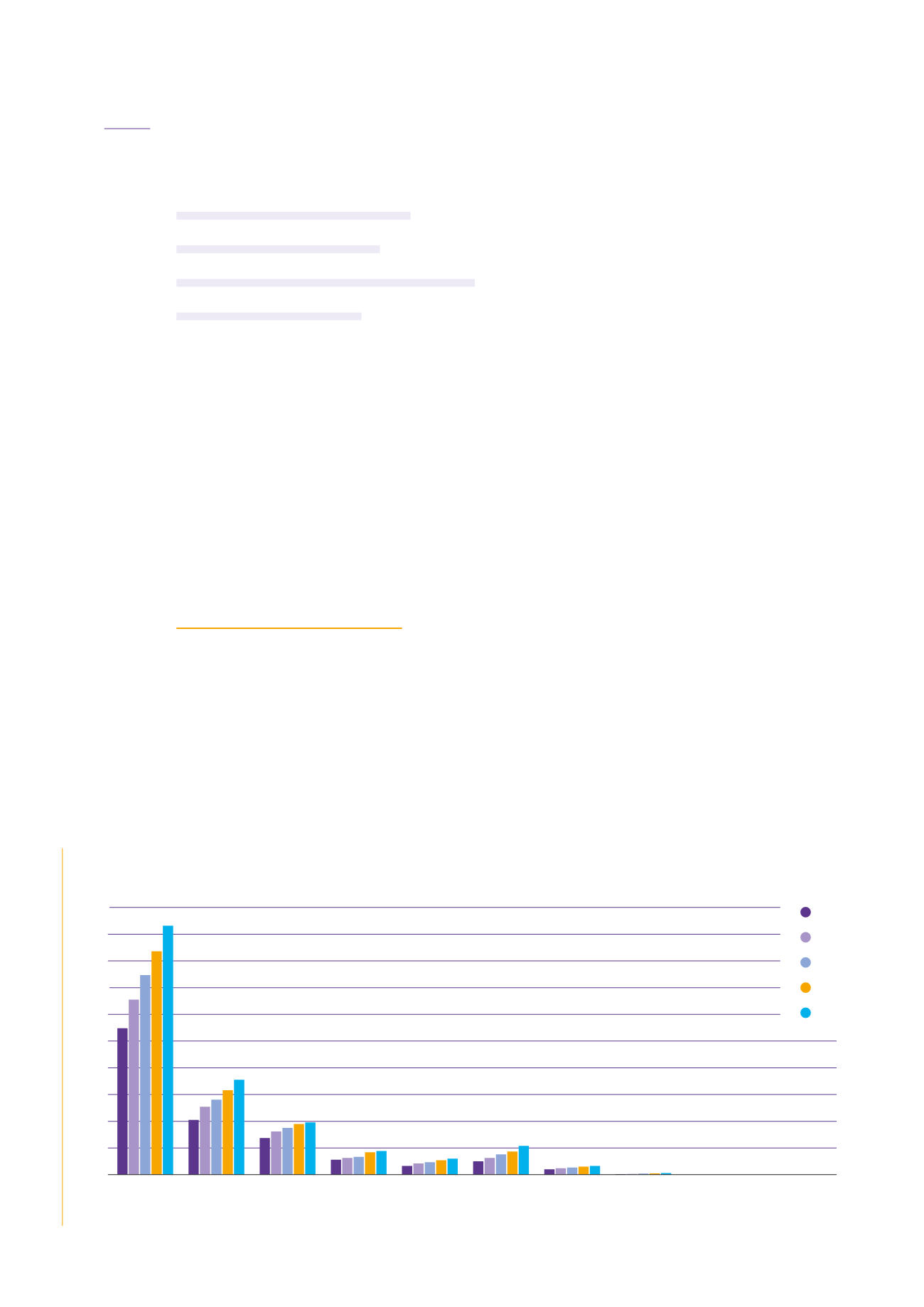
also used in veterinary diagnostic applications. Graphs 3,
4 and 6 specify the number of facilities authorised to use
electrical devices generating ionising radiation in the
listed applications. They illustrate the diversity of these
applications which have evolved over the last five years
(from 2011 to 2015). This evolution is closely related to
the regulatory changes introduced in 2002 and later in
2007, which created a new licensing or notification regime
for use of these devices. At present, the situation of the
professionals concerned is being brought into compliance
in many activity sectors.
2.1 Industrial applications
The electrical devices emitting ionising radiation are
chiefly X-ray generators. They are used in industry for
non-destructive structural analyses (analysis techniques
such as tomography, diffractometry, also called X-ray
crystallography, etc.), for checking the quality of weld
beads or inspecting materials for fatigue (in aeronautics
in particular).
The applications of these devices, which work using the
principleofX-rayattenuation,includeuseasindustrialgauges
(measurement of drum filling, thickness measurement,
etc.), inspection of goods containers or luggage and also
the detection of foreign bodies in foodstuffs.
The increasing number of types of device available on the
market canbe explainedmore particularly by the fact that
whenpossible, they replace devices containing radioactive
sources. The advantages of this technologywith regard to
radiation protection are linked in particular to the total
absence of ionising radiationwhen the equipment is not in
use. Their utilisationdoes however lead toworker exposure
levels that are comparable with those resulting from the
use of devices containing radioactive sources.
Radiography for checking the quality
of weld beads or for the fatigue inspection
of materials
These are fixeddevices orworksitedevices usingdirectional
or panoramic beams which replace gamma radiography
devices (see point 1.1.2) if the utilisation conditions so
permit.
These devices can also be put to more specific uses, such
as radiography for restoration of musical instruments or
paintings, archaeological study of mummies or analysis
of fossils.
Baggage inspection
Ionising radiation is used constantly in security screening
checks,whether for the systematic verificationof baggage or
todetermine the content of suspect packages. The smallest
andmostwidelyuseddevices are installed at the inspection
and screening checkpoints in airports, inmuseums, at the
entrance to certain buildings, etc.
GRAPH 3:
Use of electrical devices generating ionising radiation (outside the veterinary sector – see point 2.2)
0
100
200
300
400
500
600
700
800
900
1,000
Non-destructive
testing
(radiography/
fluoroscopy)
X-ray
fluorescence
analysis
Crystallography
Industrial gauge
(level measurement, etc.)
Accelerator
Research
Teaching
Calibration
Number of facilities licensed
2014
2015
2013
2012
2011
328
CHAPTER 10:
INDUSTRIAL, RESEARCH AND VETERINARY USES AND SOURCE SECURITY
ASN report on the state of nuclear safety and radiation protection in France in 2015