


 373 / 536

ASN’s oversight of organisational and human aspects
is in particular based on inspections which concern
the measures taken by the licensee to take account of
SOHF in all phases of the lifecycle of an NPP. ASN thus
regulates engineering activities during the design of a
new facility or the modification of an existing one. ASN
in particular ensures that the design approach used by
the licensee is “focused on the human operator”. In
addition, the inspections carried out by ASN concern
the activities performed for the operation of existing
NPPs, the conditions in which these activities are
performed (accessibility of premises, noise, heat and
light environment, etc.) and the means made available
to those concerned (tools, operating documents, etc.).
ASN also checks the organisation put into place by EDF
to manage the skills and staffing needed to perform
these activities. The same applies to the resources,
skills and methodology used for implementation of
the SOHF approach by EDF. ASN also monitors the
EDF safety management system, which must provide
a framework and support for the decisions and actions
which either directly or indirectly concern safety issues.
Finally, ASNmonitors EDF’s organisation for analysing
events, the depth of the analyses carried out to ensure
that the root causes are investigated, as well as the
preparation and implementation of the follow-up to
these analyses.
In addition to the inspections, ASN oversight is based on
the evaluations it requests from IRSN and the Advisory
Committee for Nuclear Reactors (GPR). For example,
the GPR was asked in 2013 to give its opinion on the
topic of safety and radiation protection management
during reactor outages and, in 2015, on the control
of outsourced maintenance activities by EDF in NPPs
and on examination of the organisational, human and
technical resources used to control the EPR reactor.
2.2 Reactor operation
2.2.1 Operation in normal conditions: ensuring
compliance with operating rules and examining
changes to documents and hardware
The General Operating Rules (RGE) cover the operation
of nuclear power reactors. They constitute the operational
implementation of the hypotheses and conclusions of the
safety assessments resulting fromthe safety report and set
the limits and conditions for the operation of the facility.
Changing Technical Operating Specifications
Within the RGE, the Technical Operating Specifications
(STE) define normal operating conditions, identify the
systems necessary for the safety functions implemented
in an incident or accident situation (see point 2.2.2) and
stipulate which measures are to be adopted if a normal
operating limit is exceeded (pressures, temperatures,
neutron flux, chemical and radiochemical parameters,
etc.) or if a required system becomes unavailable.
The STE change in order to incorporate operating
experience feedback from their application and take into
account changes made to the facilities. The licensee can
also modify them in order to carry out an operation in
conditions that are different fromthose initially considered.
ASN must be notified of any changes to the STE before
they are implemented. Among these, certain temporary
changes to the STE with minimal impact on safety are
exempted from this notification requirement, provided
that they can be dealt with by the internal authorisation
system implemented by EDF and regulated by an ASN
resolution. The working of this system is monitored by
ASN in the head office departments of the licensee and
in the NPPs.
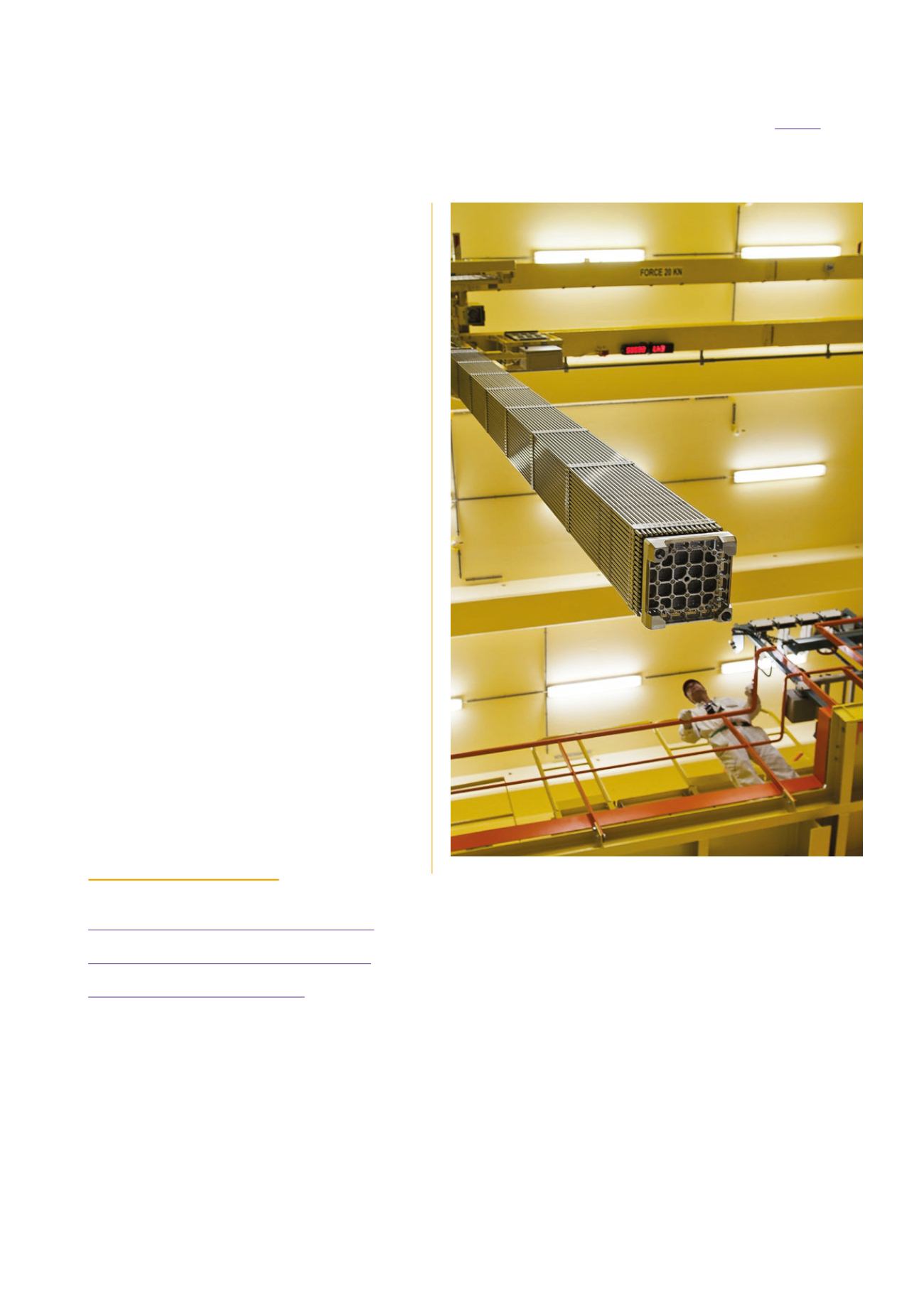
MOX fuel assembly in the loading area in the Melox facility (MOX fuel fabrication plant).
373
CHAPTER 12:
EDF NUCLEAR POWER PLANTS (NPPs)
ASN report on the state of nuclear safety and radiation protection in France in 2015