


 400 / 536

Emergency situations
The 2015 emergencymanagement inspections confirmed
that the organisationof theNPPs is satisfactory in this field.
The teams required to implement theOn-site Emergency
Plans (PUI) are correctly sized and all the emergency
team members take part in an exercise every year. The
inspections also showed that the national harmonised
baseline requirements of 2014 are correctly implemented
and that the new emergency organisation they stipulate
for each plant has been correctly taken on board.
Preparedness formanagement of emergency situations could
however be improved in terms of the management and
utilisation of mobile resources in an emergency situation
and the analysis of the lessons learned from emergency
exercises.
Fire and explosion risks
In 2015, ASN carried out 17 inspections on fire and
explosion riskmanagement in 15NPPs. These risks were
also identified during the worksite inspections carried
out during the reactor outages and during the in-depth
inspection on the Bugey NPP.
The independent safety organisation
The Independent Safety Organisation (FIS) verifies and
analyses compliance with the safety requirements by the
operational teams. It comprises three levels:
• the General Inspector (IGSNR) reporting to the Chairman
of the EDF Group, assisted by three inspectors;
• the director delegate for safety in the Nuclear Operation
Division (DPN), assisted by the nuclear inspectorate;
• and the head of the safety-quality delegation in each plant,
assisted by the safety-quality department. The safety
engineers from the safety-quality department perform daily
checks on the safety status of the facility.
UNDERSTAND
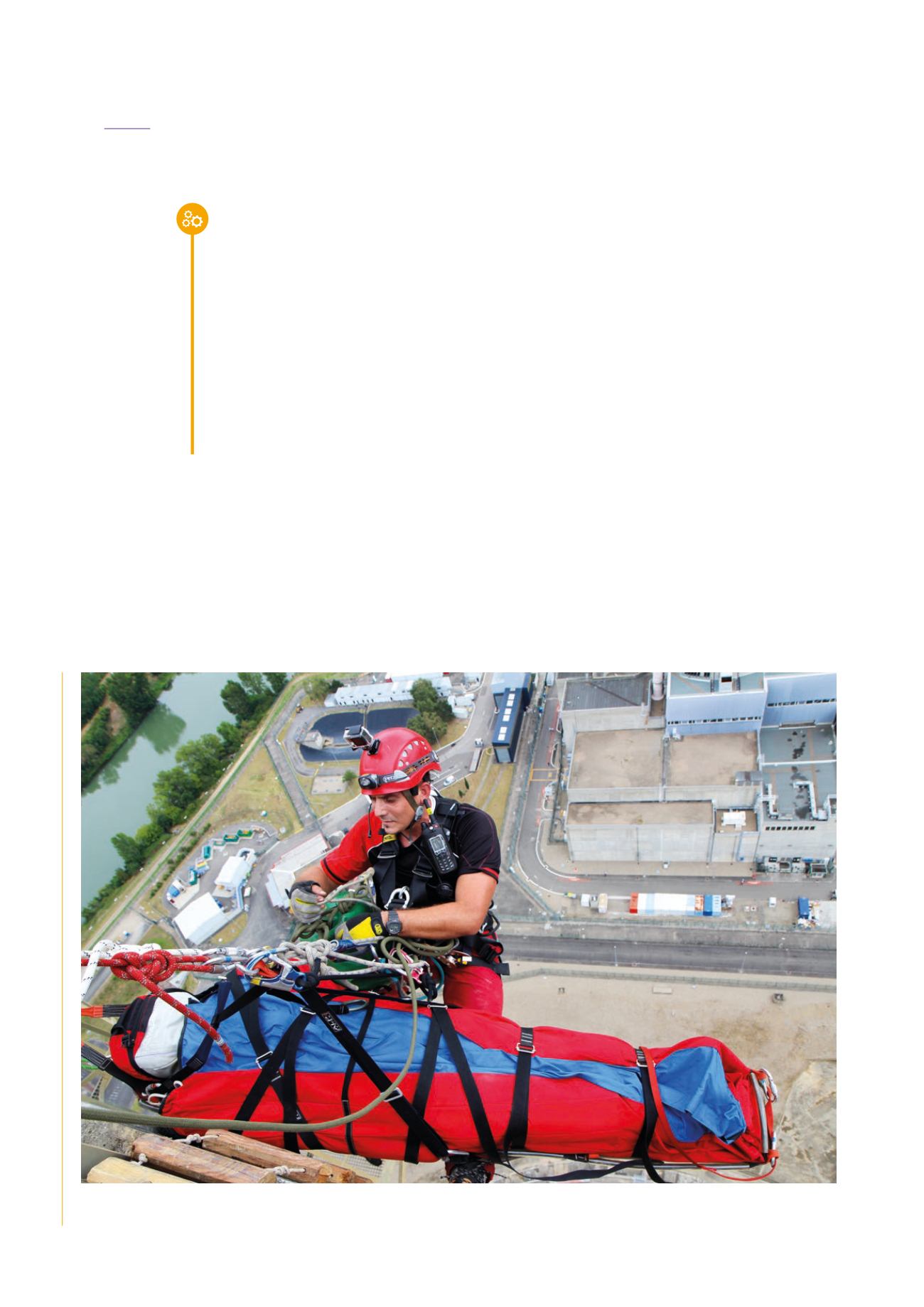
Exercise involving the rescue of two people on a cooling tower by the GRIMP
(Hazardous Environment Reconnaissance and Intervention Group) crews of the Tarn-et-Garonne departmental fire and emergency response service, at a height of 178.50 metres.
400
CHAPTER 12:
EDF NUCLEAR POWER PLANTS (NPPs)
ASN report on the state of nuclear safety and radiation protection in France in 2015