


 396 / 536

In 2010 and 2011, several non-conformities were
detected by Areva NP during the manufacture of the
vessel head. More specifically, there were numerous
defects in the vessel head adapter welds. These deviations
required Areva NP to carry out large-scale repairs,
which started in 2013. This repair work continued in
2014 and was closely monitored by ASN. Following
ASN requests, Areva NP developed a more effective
ultrasound method in 2013 to inspect the vessel head
adapter welds. This was deployed in 2015. The vessel
head repairs were completed in 2015.
At the end of 2014, Areva NP also informed ASN that
the tests carried out on a vessel head representative of
that intended for Flamanville 3 revealed the presence
of an area with a high carbon concentration leading to
mechanical properties that were lower than anticipated.
Measurements confirmed the presence of this anomaly
in the vessel closure head and bottom head of the
Flamanville EPR reactor. In the light of these results,
Areva NP sent ASN a file presenting the envisaged
approach for demonstrating the sufficient mechanical
properties of the material, this approach being based
on a new test programme.
On the Flamanville site, the construction of the EPR’s
nuclear steam supply system is progressing in successive
assembly phases, for which ASN, together with the
organisations approved for assessment of the conformity
of nuclear pressure equipment, ensures compliance
with the necessary pre-requisites. These pre-requisites
in particular concern adequate consideration of the
risks inherent in assembly, the checks to be performed
on the site and the organisation put in place by EDF
and Areva NP to limit the risks associated with the
activities carried out in the vicinity by other contractors
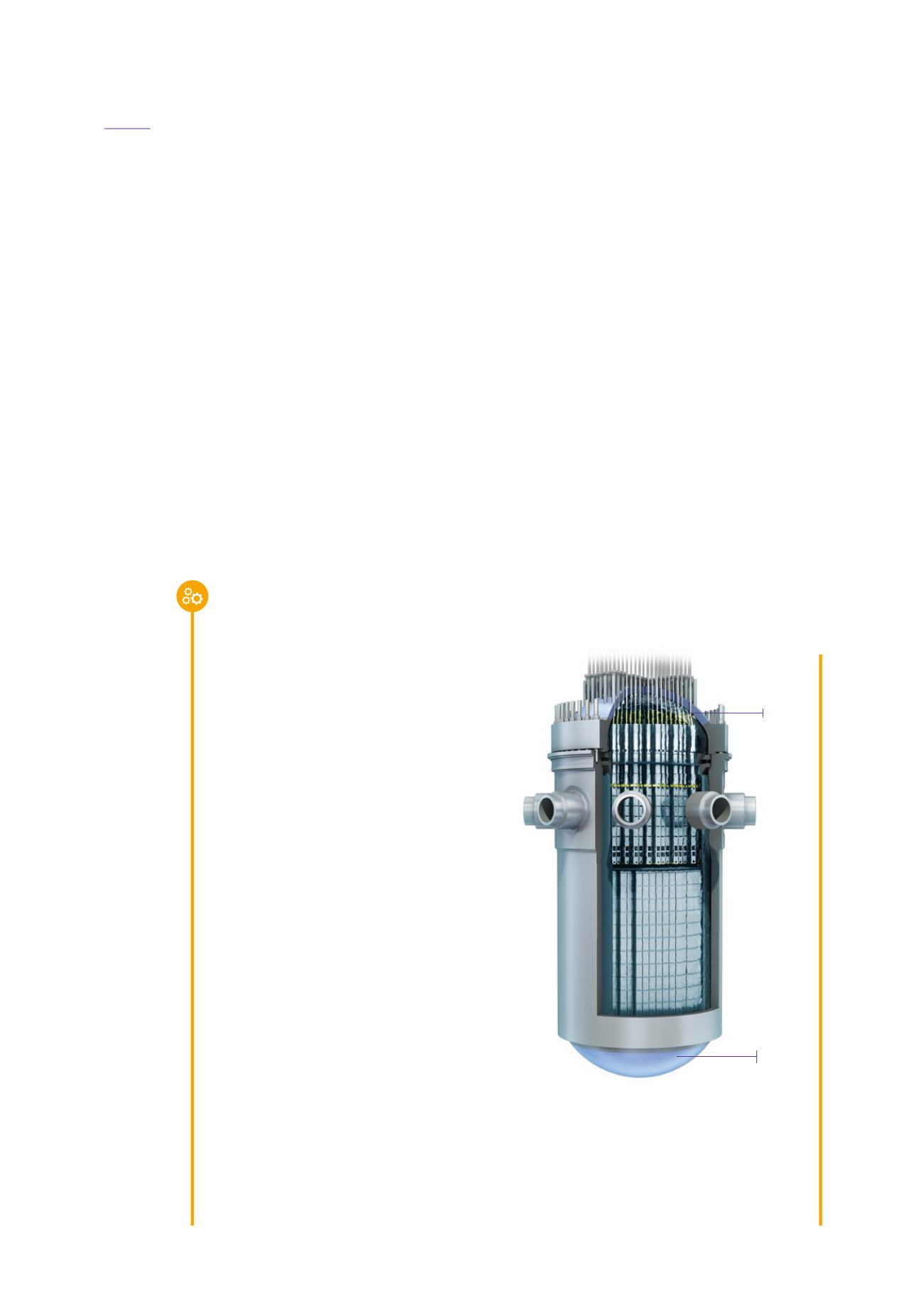
The Flamanville 3 EPR vessel
On 7th April 2015, ASN released information concerning
an anomaly in the composition of the steel in the centre of
the Flamanville 3 EPR vessel closure head and bottom head.
This anomaly is linked to the presence of a high carbon
concentration which results in mechanical properties that are
not as robust as were expected.
Areva sent ASN a file presenting the approach that it envisages
using to demonstrate the sufficiency of the mechanical
properties of the material used in the manufacture of the
vessel closure head and bottom head for the future Flamanville
EPR reactor. This approach will be based in particular on the
future results of a new programme of mechanical and chemical
tests.
After joint examination of this file with IRSN, ASN convened
the Advisory Committee for Nuclear Pressure Equipment
(GPESPN) on 30th September 2015. Representatives
from the HCTISN, the Anccli and foreign safety regulators
concerned by the construction of an EPR reactor attended this
session as observers. The GPESPN submitted an opinion and
recommendations to ASN.
On this basis, ASN issued a position statement on
12th December 2015 concerning the approach proposed
by Areva to demonstrate the mechanical properties of the
Flamanville 3 EPR vessel closure head and bottom head.
Subject to its observations and demands being taken into
account, ASN considers that the approach proposed by Areva
is acceptable in principle and it has no objection to the start of
the new planned test programme.
The results of this new test programme will be a crucial factor in
ASN’s decision on whether or not the Flamanville 3 EPR vessel
closure head and bottom head are suitable for service. This test
programme will take place over several months in 2016.
UNDERSTAND
Vessel head
Bottom head
396
CHAPTER 12:
EDF NUCLEAR POWER PLANTS (NPPs)
ASN report on the state of nuclear safety and radiation protection in France in 2015